
Although chemistry was dominated by men in retrospect, there have always been women who were not intimidated by this. Driven by a thirst for knowledge, perseverance and a dash of civil courage, they pursued their careers in science at a time when it was not yet customary for women to take their A levels, go to university and then also pursue a career. Unfortunately, their achievements were not recognised through honours such as the awarding of prizes or having institutions named after them.
To ensure that these pioneering women in chemistry are not forgotten, Prof. Dr. Eberhard Ehlers and Prof. Dr. Heribert Offermanns took the initiative in 2020 to honour them posthumously and highlight their fascinating and diverse career paths in short portraits. The GDCh presents these portraits of the first female chemists (born up to 1939) on these webpages. Be impressed and inspired by the achievements and enthusiasm of the early female chemists for their profession.
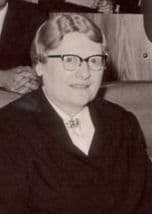
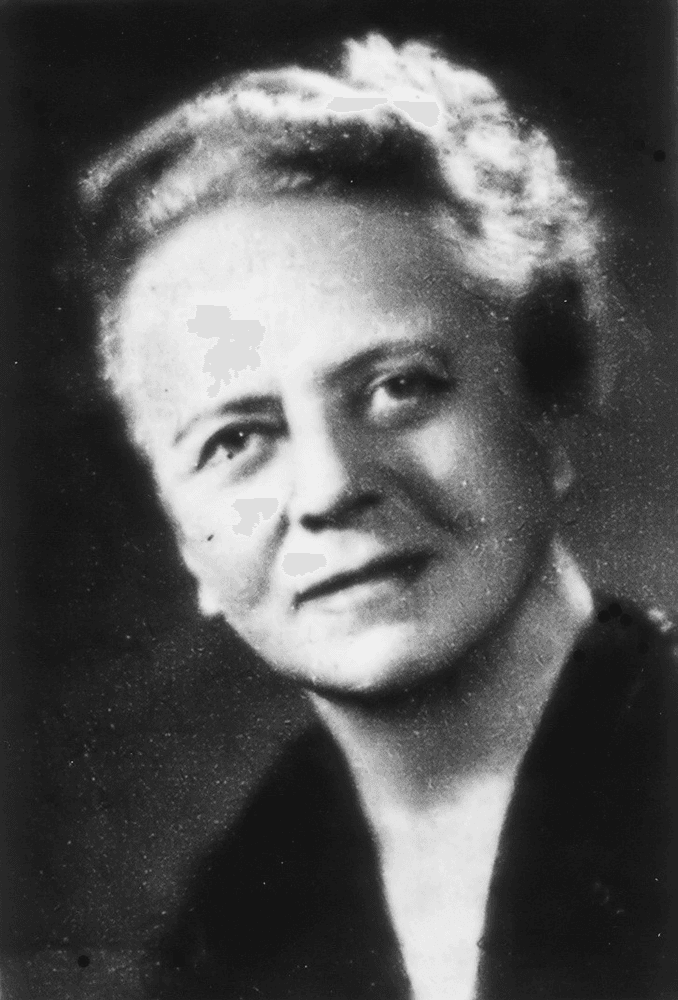
When we look at the prizes and awards in chemistry, we encounter almost exclusively renowned men. Is chemistry an exclusively male domain?
Certainly not any more today! But by 2025, the Nobel Prizes awarded had gone to 827 men, 64 women (7.2%) and 28 organisations (excluding the Nobel Prize in Economic Sciences; Literature). In chemistry, we count (as of 2025) eight female Nobel laureates out of a total of 198 people honoured (3.8%). Five of these female scientists have been honoured since 2009. (Literature)
Carolyn Bertozzi (2022)
Emmanuelle Charpentier (2020)
Jennifer Doudna (2020)
Frances H. Arnold (2018)
Ada Yonath (2009)
Dorothy Crowfoot Hodgkin (1964)
Irène Joliot-Curie (1935)
Marie Curie (1911)
In the Physiology or Medicine category, 14 women have so far been honoured with the Nobel Prize, including the German biologist and biochemist Christiane Nüsslein-Volhard.
We are currently seeing more and more women gain international recognition for their scientific achievements. But it will take time before prizes are named after them, as this often only happens after their deaths. To promote equal opportunities and the visibility of women in the scientific community, in 2020 the GDCh established the biennial Hildegard Hamm Brücher Award for equal opportunities in chemistry – a clear commitment to greater equal opportunities in chemistry.
But there have always been women who were not deterred from studying chemistry by the prevailing social conditions. Despite many obstacles and occasional hostility, they often gained the recognition of the men they worked with – including Nobel laureates. We present some of these women on these pages.
The GDCh would like to express its heartfelt thanks to the two authors and Prof. Dr. Barbara Albert, TU Darmstadt, for their conceptual advice.
Note
The texts published in this series do not claim to constitute a scientific publication. The authors and other people involved are not experts in the history of science. The purpose of the series is to introduce the mostly unknown female chemists and to remember the well-known female chemists. Readers who would like to learn more are encouraged to study scientific sources on the women presented. In some cases, detailed works on the history of chemistry are available.
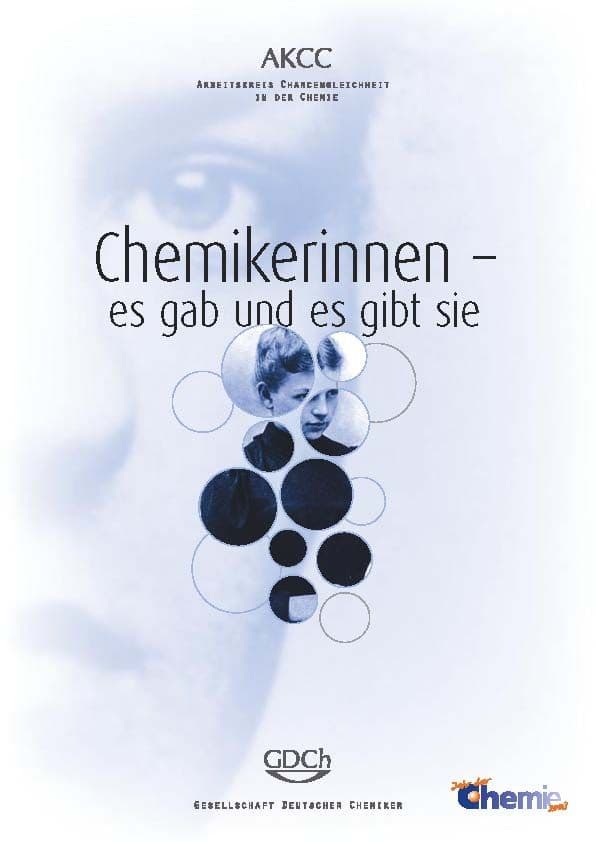
As early as 2003, the GDCh working group for equal opportunities in chemistry (AKCC), led by its then chair Dr. Marion Hertel, published a brochure "Women Chemists – They Existed and They Exist" featuring seven portraits and two interviews. These portraits, too, describe impressive women with interesting life stories.
The Senior Expert Chemists (Senior Expert Chemists; SEC) of the GDCh are collecting personal accounts, stories, anecdotes, pictures and historical documents relating to the study of chemistry and career choices in the 1950s to 1980s. You can find the contributions received so far here.