
Biography of Köster-Pflugmacher
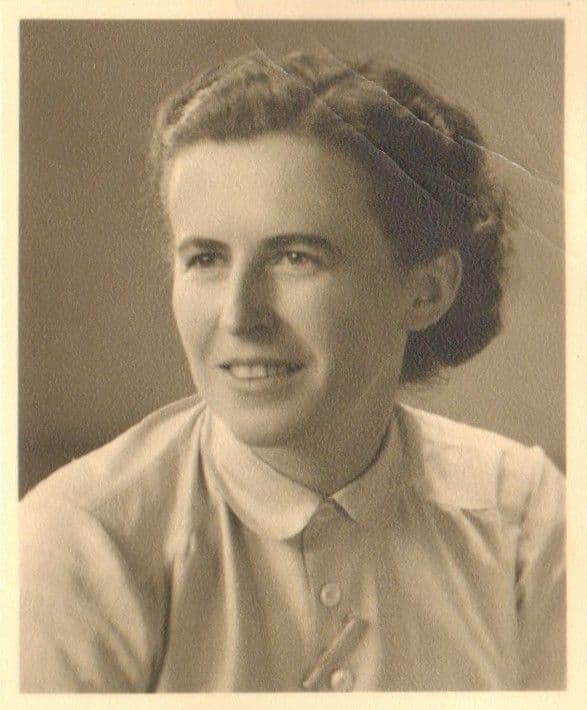
Boron, germanium and the halogens: these elements were the focus of Annelore Köster-Pflugmacher’s research. As a chemistry professor at RWTH Aachen University, she also carried out extensive teaching.
Annelore Köster-Pflugmacher (née Trapp) was born on 19 March 1919 in Königsberg, East Prussia (now Kaliningrad, Russia). After completing her Abitur, she studied chemistry at Königsberg’s Albertus University. She completed her doctoral thesis on silicon iodides under Robert Schwarz (1887–1963) at the university’s Institute of Inorganic Chemistry. On 21 November 1942, she was awarded a doctorate in natural sciences.
During her studies, she met Dieter Pflugmacher, whom she married in 1941. However, the Second World War made her a widow within a short time. Her husband was killed in July 1943.
From July 1942 to November 1944, Pflugmacher worked as a research assistant at the University of Königsberg’s Institute of Chemistry. Shortly before Russian troops invaded, she fled westwards in 1945. Pflugmacher eventually found a new professional home in Aachen. She had followed her doctoral supervisor, who in 1948 had accepted an appointment at the Rheinisch-Westfälische Technische Hochschule (RWTH) Aachen as Professor of Inorganic Chemistry and Electrochemistry. In April 1950, Pflugmacher received a permanent position as a research assistant at RWTH, where in 1953 she submitted her habilitation thesis entitled “On the Knowledge of Bromine Oxides”. In 1960, she was appointed außerplanmäßige Professorin and in 1961 appointed Academic Councillor at RWTH. During this period, she met the chemist Alfred Köster, whom she married in 1962. Two years later, the couple moved to Langenfeld in the Rhineland.
In her research, Köster-Pflugmacher focused on the oxides of bromine and the halides of boron, as well as the organometallic compounds of germanium. She primarily used X-ray fluorescence spectroscopy as an analytical method. At RWTH, she also carried out extensive teaching, as the chemistry education of students of mechanical engineering and other disciplines fell within her remit. In addition, she supervised chemistry lectures for students training to become secondary-school teachers. From 1961 onwards, Köster-Pflugmacher was also editor of the German-language new editions of the textbook “Rapid Qualitative Analysis of Cations and Anions” by Gaston Charlot (1904–1994), the founder of modern analytical chemistry in France.
Köster-Pflugmacher retired in March 1981. RWTH Aachen University honoured her habilitation thesis in 2010 in the calendar “100 Years of Women Students at RWTH”. Annelore Köster-Pflugmacher lived in Langenfeld until her death and reached the age of 83. She died on 12 August 2002.
Literature
H. Werner: Geschichte der anorganischen Chemie, Wiley & Sons, Weinheim, 2016, p. 158
Gedächtnis der RWTH Aachen, Alma Mater Aquensis, Sonderband 1870-1995, p. 71
Authors
Prof. Dr. Eberhard Ehlers
Prof. Dr. Heribert Offermanns
Editorial work
Dr. Uta Neubauer
Project management
Dr. Karin J. Schmitz (GDCh-public relations)
The authors are responsible for the content of the biographies.
The content presented on these pages has been carefully prepared. Nevertheless, the authors, Editorial staff and publisher accept no responsibility or liability for the completeness and accuracy of the content or for typographical errors.