
Vogt biography
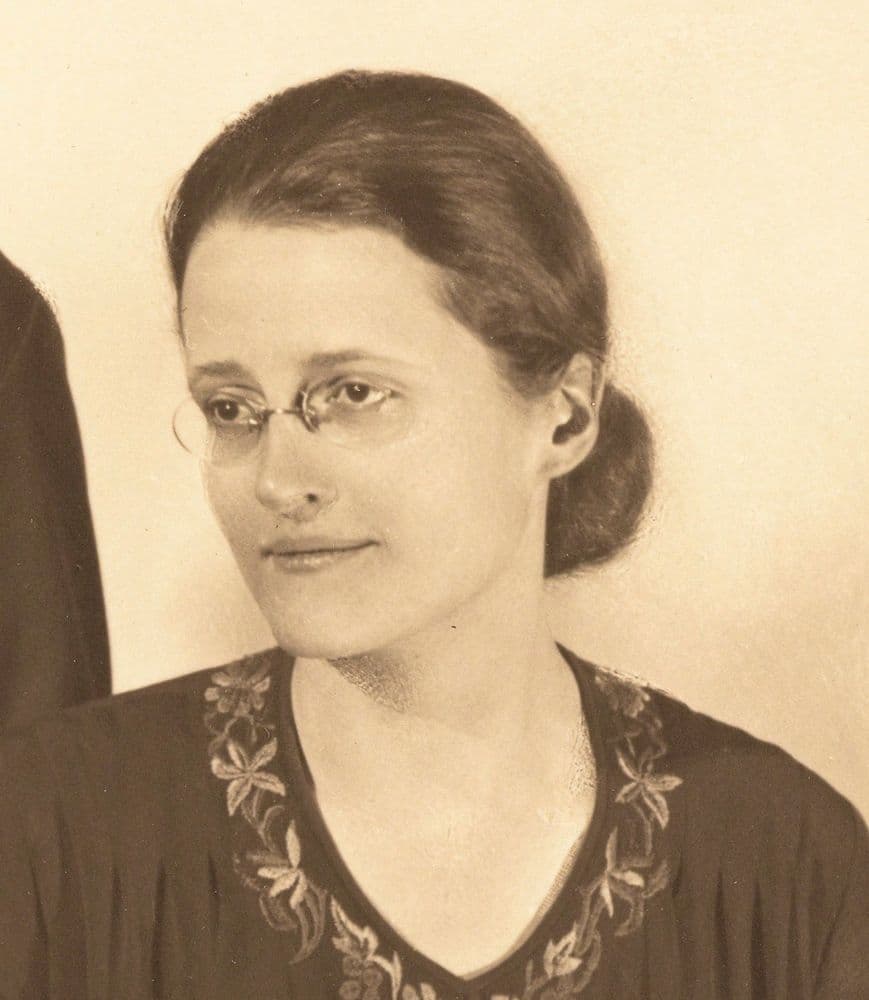
The chemist and medical doctor Marthe Louise Vogt, a native of Berlin, left Germany after the Nazis seized power. She found a second home in Great Britain. Here she researched the chemical transmission of nerve impulses and earned international recognition for the first detection of neurotransmitters in the brain.
Marthe Louise Vogt was born in Berlin on 8 September 1903, the first child of the married medical couple Oskar and Cécile Vogt. Her parents were prominent brain researchers at the neurobiological laboratory of the Friedrich Wilhelm University, now Humboldt University of Berlin. The laboratory headed by Oskar Vogt (1870–1959) later became the Kaiser Wilhelm Institute for Brain Research in Berlin-Buch, which is now based in Frankfurt am Main as the Max Planck Institute for Brain Research. Ten years after Marthe Louise was born, her sister Marguerite came into the world. She too later achieved worldwide recognition as a scientist. While Marthe Louise Vogt made a name for herself in neuropharmacology, her younger sister is regarded as a pioneer of tumour virology.
After completing her secondary education, Marthe Louise Vogt enrolled in 1922 at the Friedrich Wilhelm University in Berlin to study medicine and chemistry, specialising in biochemistry. Her academic teachers in chemistry, Wilhelm Schlenk (1879–1943) and Friedrich Adolf Paneth (1887–1958), sparked her interest in answering medical questions with the help of chemistry.
After completing her studies and a practical year in a hospital and at her father’s institute, Vogt was awarded a doctorate in medicine in 1928. She then worked in Carl Neuberg’s (1877–1956) working group at the Kaiser Wilhelm Institute for Biochemistry in Berlin. Just one year and five months after receiving her doctorate in medicine, Vogt obtained a second doctorate, this time in chemistry. For this dissertation, entitled “Investigations into the formation and behaviour of some biologically important substances from the three-carbon series”, she had studied carbohydrate metabolism. She then took up a position as an assistant at the Pharmacological Institute under Paul Trendelenburg (1884–1931) in Berlin. Following his early death, she worked in the Department of Neurochemistry at the Kaiser Wilhelm Institute for Brain Research, which had been founded by her father.
Like her father, Vogt was an opponent of National Socialism. In 1935 she left Germany and, supported by a one-year Rockefeller Fellowship, went to the National Institute for Medical Research in London. There she conducted research with Henry Hallet Dale (1875–1968), who in 1936 received the Nobel Prize in medicine together with Otto Loewi (1873–1961) for discovering and elucidating the chemical transmission of nerve impulses. The two scientists revolutionised neuromedicine and also influenced Vogt’s scientific career.
After her research stay with Dale, Vogt found new positions at the Department of Pharmacology in Cambridge, Britain, and at the College of the Pharmaceutical Society in London. In 1946 she seized the opportunity to establish her own working group under John Henry Gaddum (1900–1965) at the Department of Pharmacology at the University of Edinburgh. When Gaddum moved to the National Institute for Animal Physiology, now the Babraham Institute, in Cambridge, to become its director, she followed him. From 1960 to 1966 she headed the institute’s pharmacology department. She continued working there in retirement until her severely deteriorating eyesight prompted her to move in 1990 to join her sister Marguerite in La Jolla, California. Marthe Louise Vogt died in San Diego, USA, on 9 September 2003 at the age of 100.
As a neuropharmacologist, Vogt made important contributions to the physiology of the neurotransmitters acetylcholine, adrenaline and noradrenaline. She was the first to detect neurotransmitters in the brain. In doing so, she made a major contribution to clarifying the function of muscle-relaxing agents and psychotropic drugs. Her research also helped to improve understanding of mental illnesses such as schizophrenia. Vogt’s scientific achievements were recognised through numerous medals and honorary doctorates. In 1952, around five years after becoming a British citizen, she was elected a Fellow of the British Royal Society, the venerable academy in London. Until then, this distinction had been awarded to very few women. In 1983 Vogt became the first woman to receive an honorary doctorate from the University of Cambridge. Nor has she been forgotten in her native city: since 2001, the Forschungsverbund Berlin has awarded the Marthe Vogt Prize annually to promote early-career women scientists.
Literature
W. Cuthbert in: Marthe Louise Vogt. 8 September 1903 – 9 September 2003, Biographical Memoirs of Fellows of the Royal Society, Volume 51, 1 December 2005
H. Bielka: Geschichte der Medizinisch-Biologischen Institute Berlin-Buch, Springer, Berlin, 2002
U. Trendelenburg: Verfolgte deutschsprachige Pharmakologen 1933–1945, Frechen, Dr. Schrör, 2006
Authors
Prof. Dr. Eberhard Ehlers
Prof. Dr. Heribert Offermanns
Editorial work
Dr. Uta Neubauer
Project management
Dr. Karin J. Schmitz (GDCh-public relations)
The authors are responsible for the content of the biographies.
The content presented on these pages has been carefully compiled. Nevertheless, the authors, Editorial staff and publisher accept no responsibility or liability for the completeness and accuracy of the content or for typographical errors.