
Biography of Baroness von Wrangell
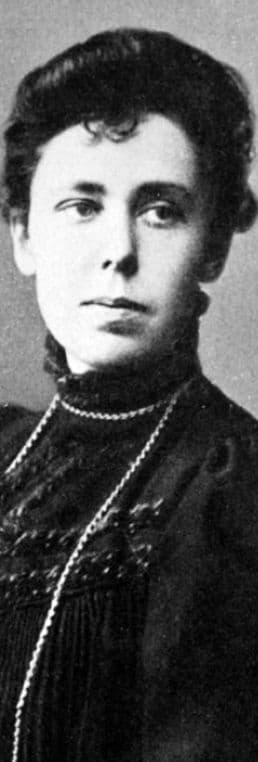
She found no fulfilment in her work as a private tutor in the natural sciences, so at the age of 26 Margarete von Wrangell began studying chemistry and botany. As head of the Institute of Plant Nutrition in Hohenheim, she caused a worldwide sensation with her studies on phosphorus fertilisation.
Margarete Baroness von Wrangell was born in Moscow on 7 January 1877. She came from a long-established Baltic noble family and grew up in Moscow and in the Estonian city of Reval, now Tallinn. After attending a German-language girls’ school in Reval and passing her teaching examination with distinction in 1894, she gave private lessons in the natural sciences for several years. But she found no fulfilment in this. In a letter to a friend, she wrote: “I feel miserable. I simply cannot cope in this eccentric world. […] I was so weary of everything. […] Surely nothing exciting, vibrant and worthwhile is ever going to happen?”
At the age of 26 – after attending a botany course at the Royal University of Greifswald – von Wrangell decided to study the natural sciences. In 1904, she enrolled as one of only a few women to study botany and chemistry at the Eberhard Karls University of Tübingen. In the Kingdom of Württemberg, to which Tübingen belonged at the time, women had been allowed to attend universities since 1904. Margarete von Wrangell was therefore among the first female students. In 1909, she was awarded a doctorate in organic chemistry in Tübingen, summa cum laude. The title of her doctoral thesis was “Isomeric Phenomena in Formylglutaconic Acid Ester and its Bromine Derivatives”. She then obtained a position at the agricultural experimental station in Dorpat, now Tartu, Estonia’s second-largest city after Tallinn.
Von Wrangell spent research periods in 1910 with chemistry Nobel laureate William Ramsey (1852-1916) at University College London (1910), and in 1912 with two-time Nobel laureate Marie Curie (1867-1934) at the Sorbonne in Paris. At the end of 1912, she took over the management of the experimental station of the Estonian Agricultural Society in Reval. When the station had to close during the October Revolution in 1917, von Wrangell was imprisoned for several weeks because she had refused to hand control of the station over to the revolutionaries. After being liberated by German troops, she left the Baltic region for good.
In the summer of 1918, von Wrangell was offered the opportunity to take up a post at the Hohenheim Agricultural Experimental Station near Stuttgart. As early as 1920, she was entrusted with the management of the newly founded Institute of Plant Nutrition. She completed her habilitation in the same year with a scientific study on “Phosphoric Acid Uptake and Soil Reaction”. The position as head of the institute was initially advertised as an associate professorship, but on 1 January 1923 von Wrangell was appointed full professor of plant nutrition at the Hohenheim Agricultural College, despite considerable opposition from the male faculty members. She was the first female full professor in Germany.
Von Wrangell acquired an impressive scientific reputation in a relatively short time. Personally, however, she was considered dominant, even overbearing. This was hardly conducive to a collegial relationship with the other university lecturers in Hohenheim, as she expressed in a letter to her mother: “I have many struggles in my profession. I am the first female full professor in Germany. I have also been publicly recognised by several eminent scientists. This has earned me the enmity of many people; but my institute is an achievement that will remain of lasting value and benefit. […] In any case, I know what I am fighting for.”
Through her studies on phosphorus fertilisation, which in some cases sparked heated disputes, von Wrangell became known as a scientist far beyond her own field. Her role as editor of the practical book “The Theory of Fertilisers” by her Soviet colleague Nikolayevich Pryanishnikov (1865-1948), published in 1923, also attracted considerable attention. In 1928, von Wrangell married her cousin and childhood friend, Prince Vladimir Andronikov. From then on, she was entitled to call herself Princess Andronikov.
Von Wrangell described her close relationship with plants as follows: “I lived with the plants. I put my ear to the soil and it seemed to me that the plants were glad to have the opportunity to tell someone about the secrets of growth.” During her time as head of the Hohenheim Institute, 42 scientific papers were published and 15 doctoral theses completed. She ran the institute, which included laboratories and an experimental field, through financially difficult times until her early death on 21 March 1932. Margarete von Wrangell died in Hohenheim at the age of just 55 from chronic kidney disease.
When the University of Hohenheim celebrated its 200th anniversary in January 2018, it honoured von Wrangell as one of the most important women in the history of the university. Two state funding initiatives also bear her name: a foundation established by the government of North Rhine-Westphalia in 1992, and a postdoctoral qualification programme for women launched by the Baden-Württemberg Ministry of Science in 1997, which has already supported more than 200 female scientists. As a result, the proportion of women at universities in Baden-Württemberg has risen significantly in recent years.
Literature
A. Mayer, Die Naturwissenschaften, Vol. 22, 1932, pp. 322-324
Th. Heuß: Margarethe von Wrangell 1877-1932, in: Deutsche Gestalten, Studien zum 19. Jahrhundert, 3rd edition, R. Wunderlich, Stuttgart, 1951, pp. 479-486
I. Hubatius-Himmelstjerna: Daisy. Aus dem Leben der großen Frau und Forscherin Margarethe von Wrangell, Ensslin & Laiblin, Reutlingen, 1957
S. M. Schwarzl, W. Wunderlich, Nachrichten aus der Chemie 49, 2001, pp. 824-825
Authors
Prof. Dr. Eberhard Ehlers
Prof. Dr. Heribert Offermanns
Editorial work
Dr. Uta Neubauer
Project management
Dr. Karin J. Schmitz (GDCh-public relations)
The authors are responsible for the content of the biographies.
The content presented on these pages has been carefully prepared. Nevertheless, the authors, Editorial staff and publishers accept no responsibility or liability for the completeness and accuracy of the content or for typographical errors.