

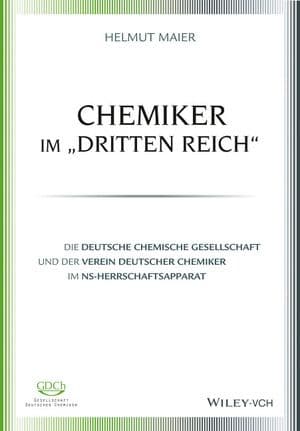
The history of the chemical industry in the Third Reich has been comprehensively documented, but until now there had been no study of the scientific organisations of chemists. The GDCh commissioned the accomplished historian of science and author of several works on the history of science, Professor Helmut Maier, to write a study of the German Chemical Society and the Association of German Chemists within the Nazi regime. This resulted in the book “Chemists in the Third Reich”. It covers the entire period from 1933 to 1945 and, in his work, also draws on previously inaccessible documents.
The book—which is aimed at chemists, historians and, of course, anyone interested in history—examines the history of the two predecessor organisations of the GDCh and provides a well-founded analysis of the involvement of individuals and of the chemical societies as such in the Nazi regime of injustice.
From the foreword by Professors Henning Hopf and Petra Mischnick: “It is a mistake to believe that historical events—and particularly negative events—can in any way be ‘made good again’ or even ‘overcome’. But we can and must remember them in as much detail as possible. This is the purpose of the present work.”
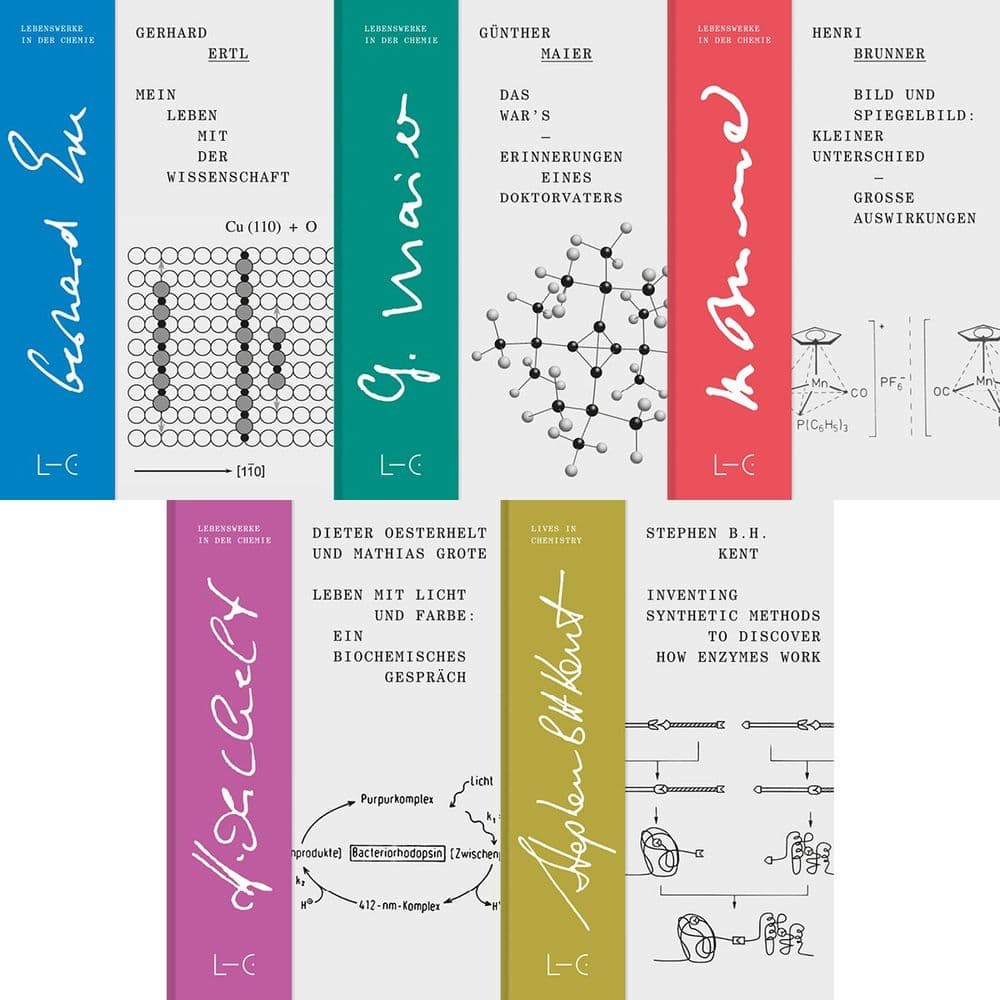
The autobiographical series “Lives in Chemistry” offers insights into the lives and thinking of outstanding researchers as reflected in their times. What role does the uninterrupted sequence of hypothesis, experiment and interpretation play in leading-edge chemical research, and what role is played by the impulses of mentors, colleagues and students, or indeed competitors? Successful scientists describe authentically and personally how new discoveries arise in the natural sciences.
An advisory board appointed by the Board of the Division of history of chemistry in the German Chemical Society (GDCh) oversees the series.
The books were published by GNT-Verlag GmbH.
From an ice cube crane to homemade Christmas tree decorations: more than 50 original experiments on the fundamentals of chemistry, with illustrated instructions and child-friendly explanations, spark an interest in nature and science in a playful way.
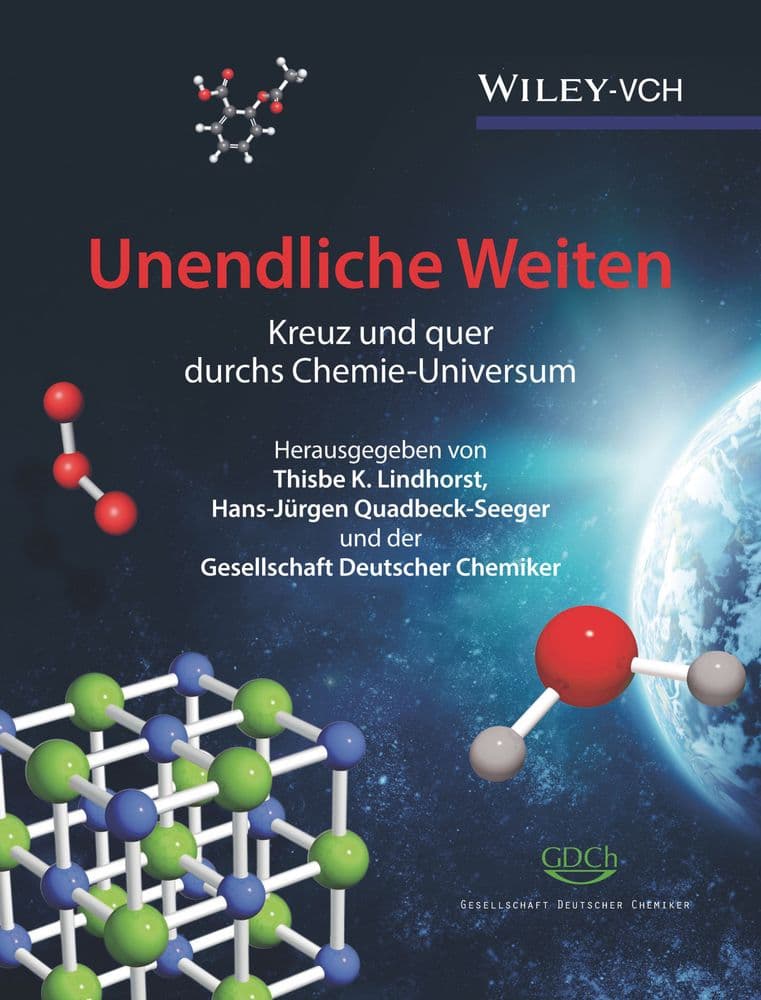
To mark its 150th anniversary in 2017, the German Chemical Society (GDCh) published a book that entertainingly explores the achievements and possibilities of chemistry in all its facets. Numerous renowned authors take readers on an accessible and diverse journey through the world of chemistry.
The book is aimed at both non-specialists in the natural sciences and experts, and offers a colourful kaleidoscope of approaches to gaining a better understanding of the importance of chemistry to our world. The book was edited by the then GDCh President Thisbe K. Lindhorst, former GDCh President Hans-Jürgen Quadbeck-Seeger and the GDCh itself.
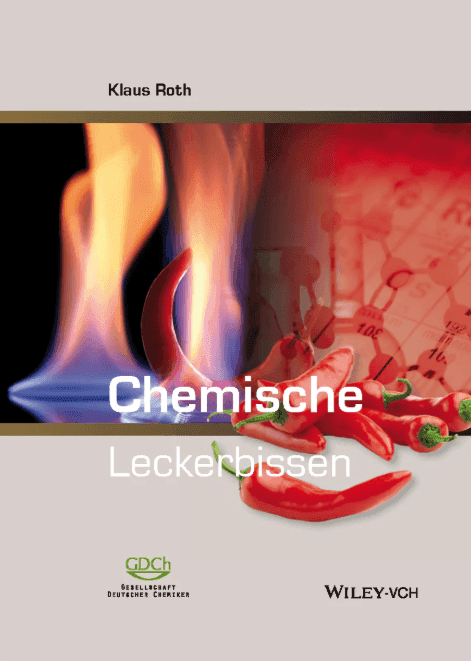
No trace of boredom here—just reading enjoyment in abundance, with a little chemistry learned along the way? Klaus Roth achieves this like no one else. He doesn’t just explain—no, he brings chemistry to life in all its witty, serious and fascinating facets.
Let yourself be taken on a richly illustrated, wild ride through chemistry. The journey will be long, but never boring. And in the end, the verdict is: Who says chemistry is complicated? Chemistry is fun!
Beginning with Herrmann Staudinger, macromolecular chemistry has been a central part of Germany’s research landscape for almost 100 years. Many scientific, and now also economic, achievements have been made in Germany by the numerous outstanding polymer chemists of past and present. The university guide brings together the extensive range of current research into polymers and macromolecules – all working groups involved in polymer research in Germany are presented in a short profile.
The university guide was compiled by the GDCh Division of Macromolecular Chemistry.
A colourful collection of eyewitness accounts brought together in book form: this is the GDCh anniversary volume “Chemistry Experienced – 50 Years of GDCh”, published in 1999. 28 renowned chemists report on the period from reconstruction through to reunification and beyond. What was discussed and debated, what was researched and worked on? “Chemistry Experienced” highlights many milestones in chemistry from the past 50 years.
You can also purchase our monographs, for example summaries of scientific conferences, in our shop.