2010 ESOC
3rd Technology Tour of the Senior Expert Chemists to Darmstadt
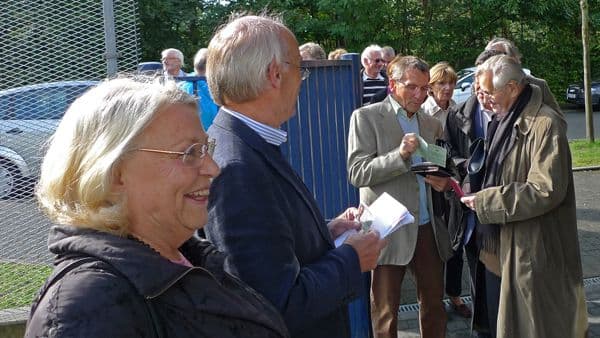
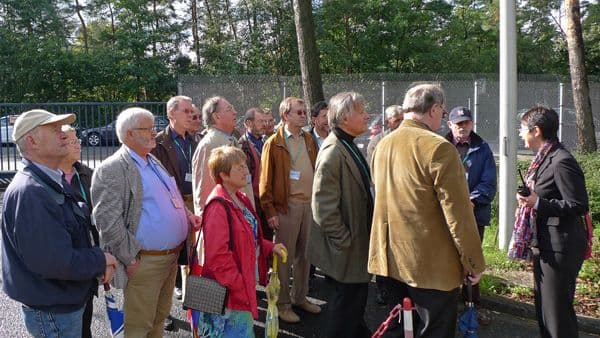
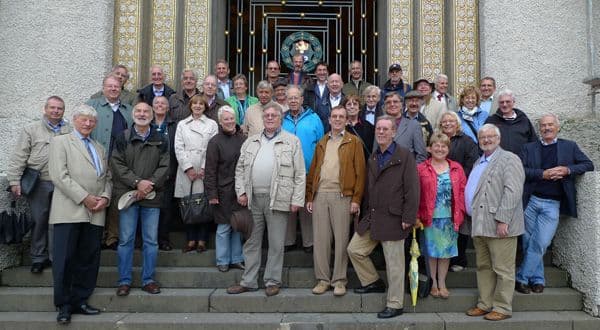
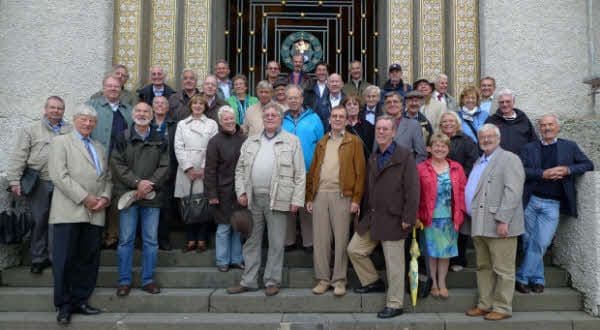
A tried-and-tested concept by now: Senior Expert Chemists (SEC) of the GDCh, together with VAA pensioners from the Wolfgang Industrial Park near Hanau, went on an excursion to Darmstadt on 30 August 2010. The programme included a visit to ESOC (European Space Operations Centre) and the Art Nouveau villas on Mathildenhöhe. Clearly an attractive offer, as no fewer than 40 people had registered!
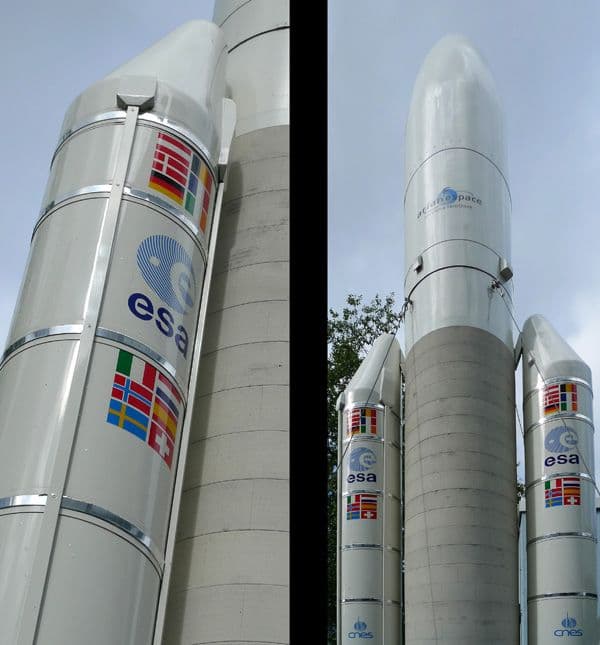
ESOC is the control centre of the ESA (European Space Agency). It is responsible for operating all ESA satellites and for the worldwide network of ground stations required for this purpose. People from Darmstadt like to call it “Hesse’s gateway to space”. To date, ESOC teams have supported more than 60 ESA satellites, including Huygens, Mars Express, Rosetta, Envisat, GOCE, Herschel and Planck.
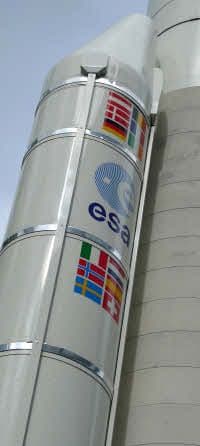
The centre has successfully carried out the most challenging satellite rescue operations and is also a specialist in space debris.
A little imagination is needed when visiting ESOC. Unless a satellite is being launched into space—the ESOC takes control as soon as the satellite separates from the launch vehicle—the designated control room is yawningly empty. You have to imagine the flight director, surrounded by numerous specialists, all seated in front of enormous screens. Each person has a specific task relating to part of the satellite, and everyone must react very quickly to unforeseen situations. One example: if the antenna with the solar cells does not deploy quickly enough, the batteries will be empty before the satellite can begin working.
What made a particular impression? I will highlight two missions. First, the twin satellites Herschel and Planck, which, at a detector temperature of 0.3 K (and for Planck just 0.1 K!), can receive the weakest signals in the far infrared from the edge of the universe. In this way, researchers hope to get closer to understanding the origin of the universe (Big Bang theory). Secondly, Rosetta’s landing on a comet. Comets are particularly valuable for researching the formation of the solar system because their matter has remained virtually unchanged. Rosetta has been travelling since March 2004 and is due to land on its target comet in November 2014. To save fuel, Rosetta was accelerated considerably by several fly-bys (swing-bys) of Earth, similar to the way a hammer thrower gives their implement momentum. Satellite missions often last for decades. The telecommunications satellite Marecs-B2, for example, was launched in 1984 and is still being controlled today—with 1984 computer technology!
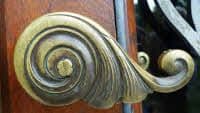
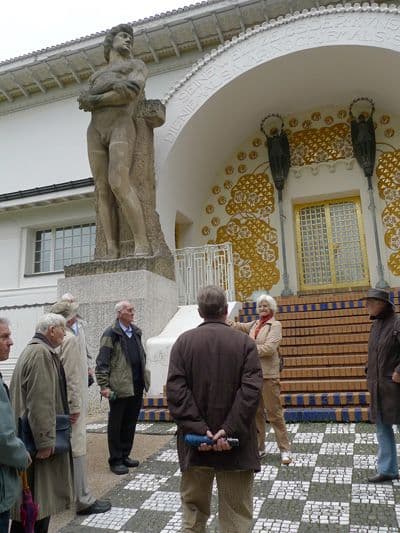
Darmstadt owes its status as a world-renowned centre of Art Nouveau to its last Grand Duke, Ernst Ludwig of Hesse and by Rhine. In 1899, he founded the artists’ colony on Mathildenhöhe in Darmstadt, initially inviting Joseph Maria Olbrich to Darmstadt. Olbrich was followed by other important artists such as Peter Behrens, Hans Christiansen, Ludwig Habich, Bernhard Hoetger and Albin Müller, who, thanks to Ernst Ludwig’s financial support, were able to further develop Art Nouveau and above all realise it in the form of residential buildings.
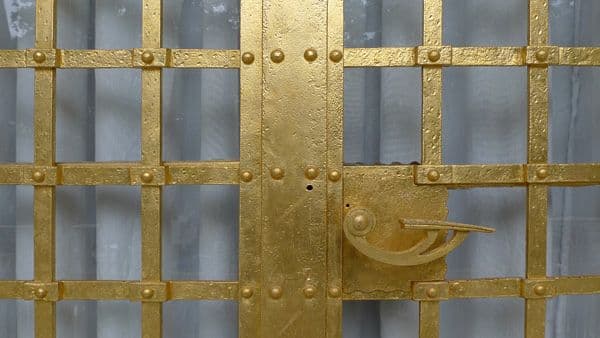
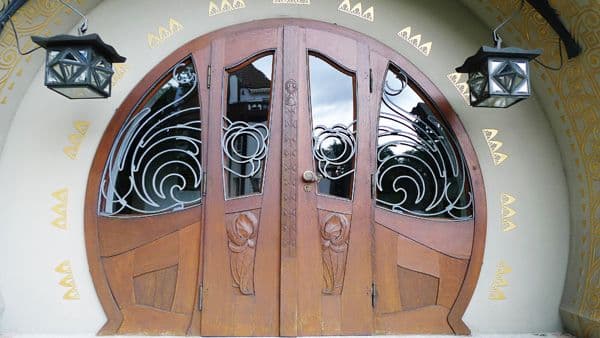
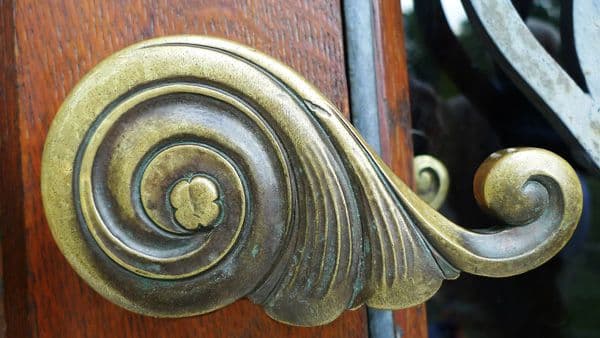
Art Nouveau was a revolt against the overblown historicism of the “Belle Époque” (or the imperial era) and against industrial mass production, particularly in Victorian England. The artists’ houses are characterised by asymmetry, floral elements, rounded forms and, above all, lightness.
Unfortunately, the Art Nouveau villas on Mathildenhöhe were badly damaged during the Second World War. The pensioners were able to visit two of the artists’ houses and gain an impression there – once again with a certain amount of imagination – of how the philosophy of Art Nouveau, the unity of artist and craftsman, shaped the sphere of everyday life. This very unity later had a major influence on the Bauhaus in Weimar.
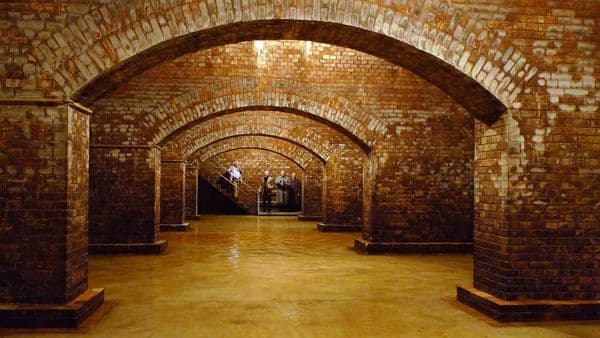
Despite careful planning, one aspect of the excursion could not be organised: the weather. The vision was of a hot, dry midsummer’s day; the reality was cold and wet! In keeping with the vision, a special treat brought the tour to a close. As the highest point in Darmstadt, Mathildenhöhe was predestined for a large water reservoir. It was built in 1880 and held almost 5,000 m3. Today, the listed structure forms the foundation of the large exhibition building. The water in the catacombs is now only 30 cm deep. What a welcome relief after a hot day of sightseeing! On this cool, rainy day, however, the pensioners’ enthusiasm for the refreshment was very limited!
Art Nouveau and ESOC: for Darmstadt, the result of fortunate circumstances and a little coincidence. The presence of the former “Technical University” and a mainframe computer led to the ESA’s decision to choose Darmstadt in 1967. Grand Duke Ernst Ludwig was one of the many grandchildren of Queen Victoria of England. There, he benefited from a proper English education and became acquainted with the Arts and Crafts movement – rightly regarded as one of the pioneers of Art Nouveau.
Text and photos: Wolfgang Gerhartz