Michael Röper
Moderation: Eberhard Ehlers
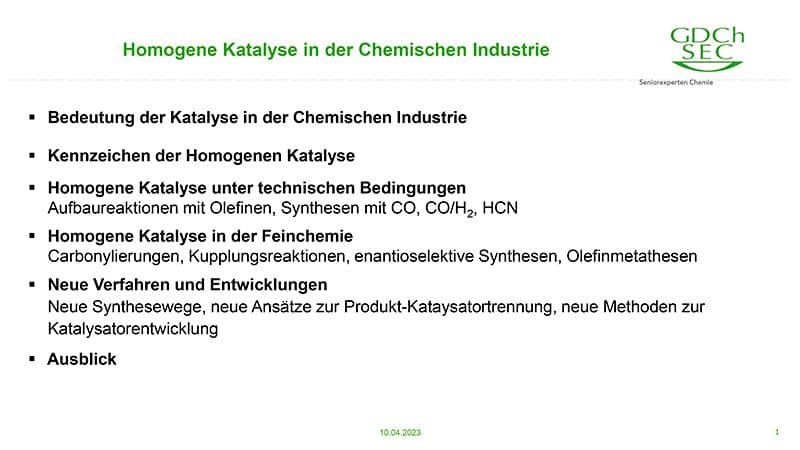
Catalytic processes are the key to sustainable syntheses in the chemical industry. Processes using heterogeneous catalysts dominate in this area. Nevertheless, homogeneously catalysed processes have become established industrially, both for basic chemicals and in fine chemicals. Their high selectivities result in the generation of only small quantities of by-products – which is not only an economic advantage but also protects our environment. In addition to selectivity, the decisive success factors are the activity and service life of the catalysts used.
Moderation: Klaus-Peter Jäckel
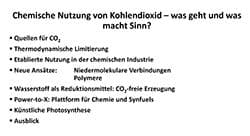
Carbon dioxide is the carbon carrier of our planet. Through photosynthesis/sunlight, all naturally occurring organic compounds, including fossil fuels, have been formed from it. Although carbon dioxide is an extremely energy-poor molecule, it can nevertheless undergo chemical reactions. However, energy-rich reaction partners such as hydrogen, ethylene oxide or ammonia are required for this. The lecture will present established new syntheses using carbon dioxide, as well as new ones currently in development. These include very large-volume syntheses, for example of fuels (e-fuels). However, their demand for (sustainable!) energy is enormous.