
Klaus-Dieter Jany
Moderation: Eberhard Ehlers
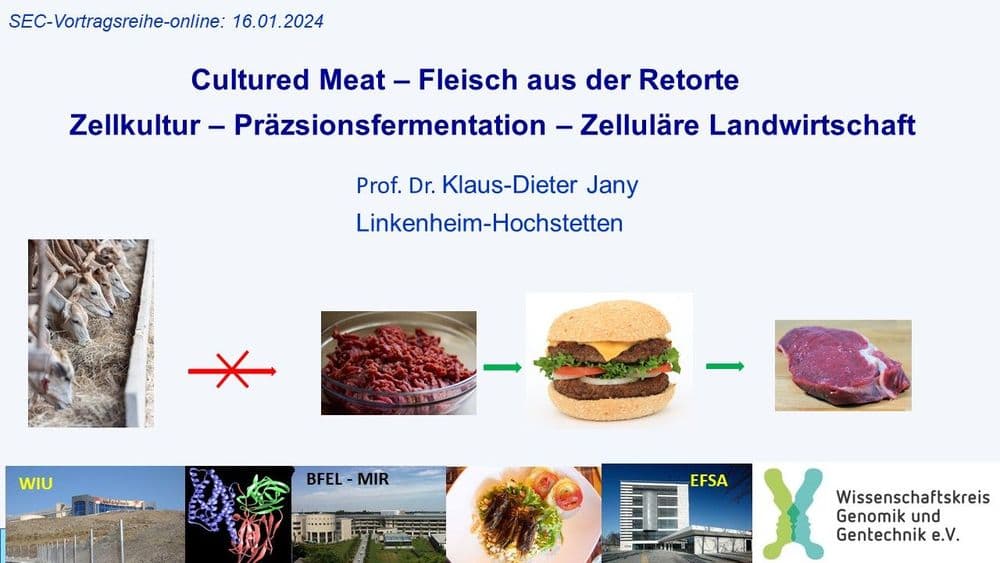
Agriculture, with its intensive cultivation and livestock farming, is associated with a wide range of negative impacts on the climate and biodiversity. Agriculture is responsible for 14% of global greenhouse gas emissions alone, with the production of animal products accounting for a significant proportion. In addition, obtaining animal proteins is highly inefficient. Approximately 6 kg of plant protein are required to produce one kilogram of animal protein; in other words, with current meat consumption, around 40% of the grain harvest and 70% of the soybean harvest go towards animal feed.
In order to reduce environmental impacts and agricultural land use, and partly for health reasons, the production of alternative meat-like products began at an early stage. As early as the mid-1980s, fermentatively produced “single cell” proteins came onto the market, which were then transformed into meat substitutes with the appropriate ingredients. Today, development in this field is continuing, specifically in the fermentative production (precision fermentation) of specialised or customised animal proteins using genetically modified microorganisms. At present, two methods have become established for producing “meat” in the laboratory:
The lecture will focus primarily on obtaining “meat” from stem cells. With regard to “meat” made from plant proteins, the advantages, limitations and range of applications will be discussed, as will aspects of environmental protection and health. Insects and legal requirements will also not be overlooked.
Did you enjoy the lecture? Or will you be unable to attend the lecture? Then email Prof. Jany ; he will be happy to provide you with the slides from his lecture.
Chair: Klaus-Peter Jäckel
Genetic engineering is a generic term for applications of molecular biological techniques to alter the genetic information of organisms. Genetic engineering has now found its way into all areas of our lives. However, in the public consciousness, only the areas of plant breeding and food are prominent.
Moderation: Eberhard Ehlers
Abstract: In 2020, researchers Emmanuelle Charpentier and Jennifer A. Doudna were awarded the Nobel Prize in Chemistry for their research into and establishment of the CRISPR/Cas system. Here is an extract from the grounds for the award:
“Crispr-Cas9 has revolutionised the molecular life sciences, opened up new possibilities for plant breeding, contributed to innovative cancer treatments and could make the dream of curing hereditary diseases come true. Charpentier and Doudna made one of the sharpest tools of genetic engineering usable.”
The lecture will explain the new methods for genomic modification, discuss areas of application and examine the impact of inadequate legislation on Germany and the EU as business locations.