
Hendrik Emons
Moderation: Klaus-Peter Jäckel
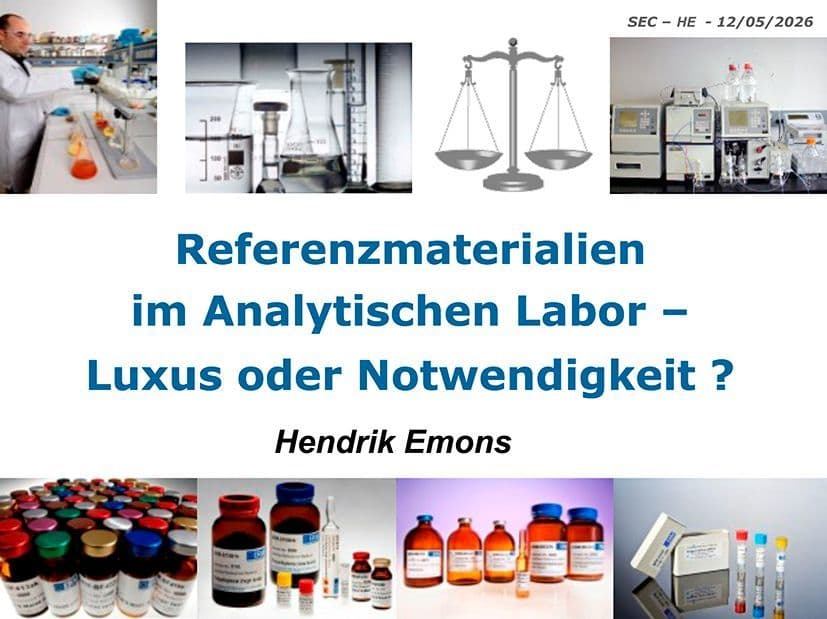
When equipping and operating an analytical laboratory, the focus is often on the instruments. However, obtaining meaningful and reliable results also requires appropriate selection and use of non-instrumental laboratory materials, as well as corresponding investment. This applies in particular to more complex (bio)chemical analyses. The lecture will therefore explain general requirements for laboratory materials used in the calibration and quality assurance of analytical processes. Examples from medical diagnostics, food control and environmental monitoring will illustrate existing and new challenges.
Zoom link: https://us06web.zoom.us/j/89421847097?pwd=DDdg9mDF9Onixxic0qkQtgR6VQp50Y.1
Passcode 571319 Meeting ID 894 2184 7097
There will be a five-minute start-up presentation before the lecture. Julian Kimmich from LinkdLab will present “End-to-end automation for research laboratories”.
Chair: Petra Schulltheiß-Reimann
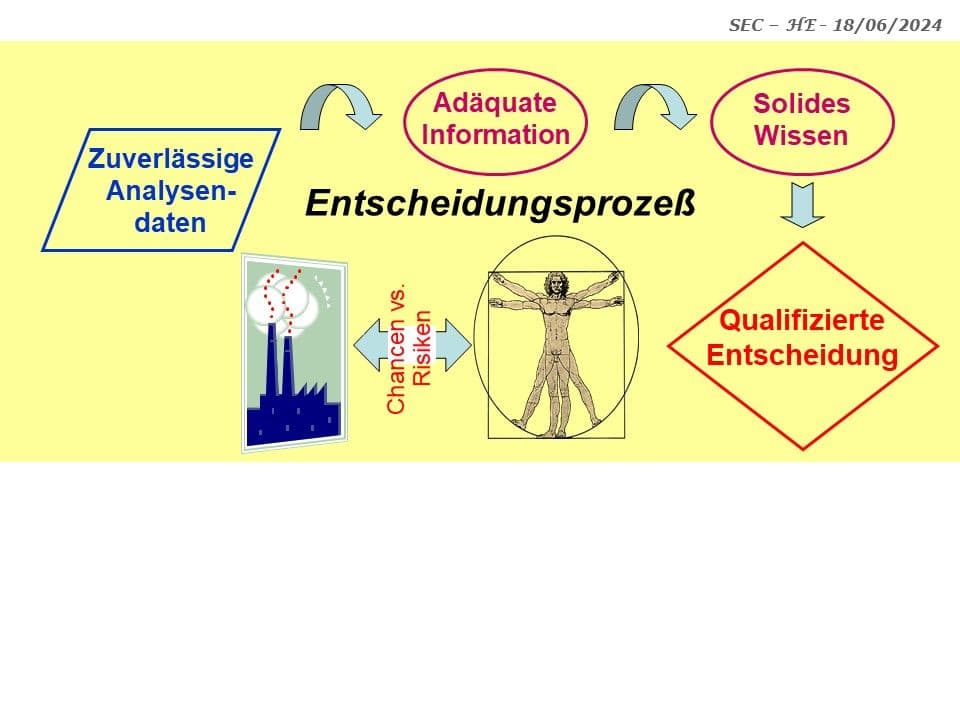
The development and implementation of regulatory measures require extensive information, which is often also based on chemical-analytical data. The timely provision of reliable analytical results for decision-relevant parameters in risk assessments and risk management also involves scientific challenges in a legislative context, some of which are presented here by way of example. Using examples from the fields of food safety and ‘Green biotechnology’, contributions from modern Analytical Chemistry to the further development of the field of “regulatory science” are explained.