Gerhard Kreysa
Chair: Wolfgang Gerhartz
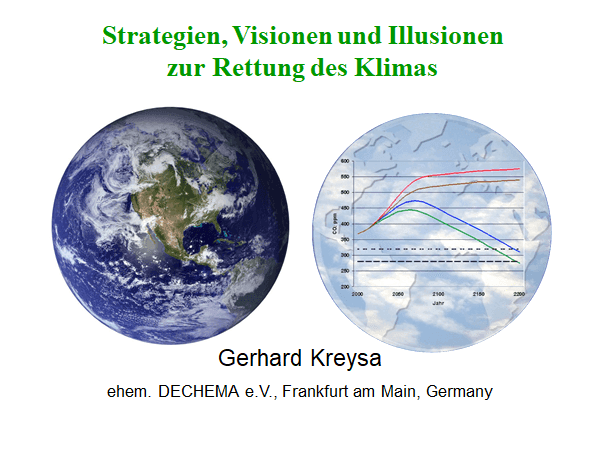
After a comparison between the energy of fire and human power, the history of sustainability is briefly addressed. This is followed by considerations of human influence on the carbon cycle. The resulting consequences for climate change are outlined. A look at the world's energy reserves shows that, by completely burning the carbon, we would destroy once again the conditions created by carbon that have enabled higher life on Earth.
The most important technical potentials of the energy transition are presented and briefly discussed. The positive contribution of electric mobility is addressed. Its misguided approaches, such as biofuels, are also discussed, because they are currently being demanded again.
According to findings that are now almost certain, the pace of the energy transition is too slow to still achieve the Paris Agreement's internationally binding target for all signatory states of limiting the temperature rise to 1.5 oC. In parallel with climate protection through restructuring our energy system, measures must therefore be taken to remove CO2 from the atmosphere again. The proposals and technical possibilities existing for this purpose are discussed. There will not be one method of choice; rather, only a combination of different measures appears promising. One of these possibilities is the afforestation proposed by the author in 1996 and 2008, with the partial permanent storage of the wood, which is discussed at the conclusion.
Moderator: Klaus-Peter Jäckel
Based on a brief presentation of the scientific consensus on the need for action regarding climate protection, lesser-known options in particular will be presented. Methane pyrolysis, for example, could be superior to other routes to hydrogen, while biofuels are more likely to occupy niche markets. Of the numerous proposals for restoring the atmosphere through climate geoengineering, the geological storage of wood is likely to be particularly promising.