
Otto-Stern Award
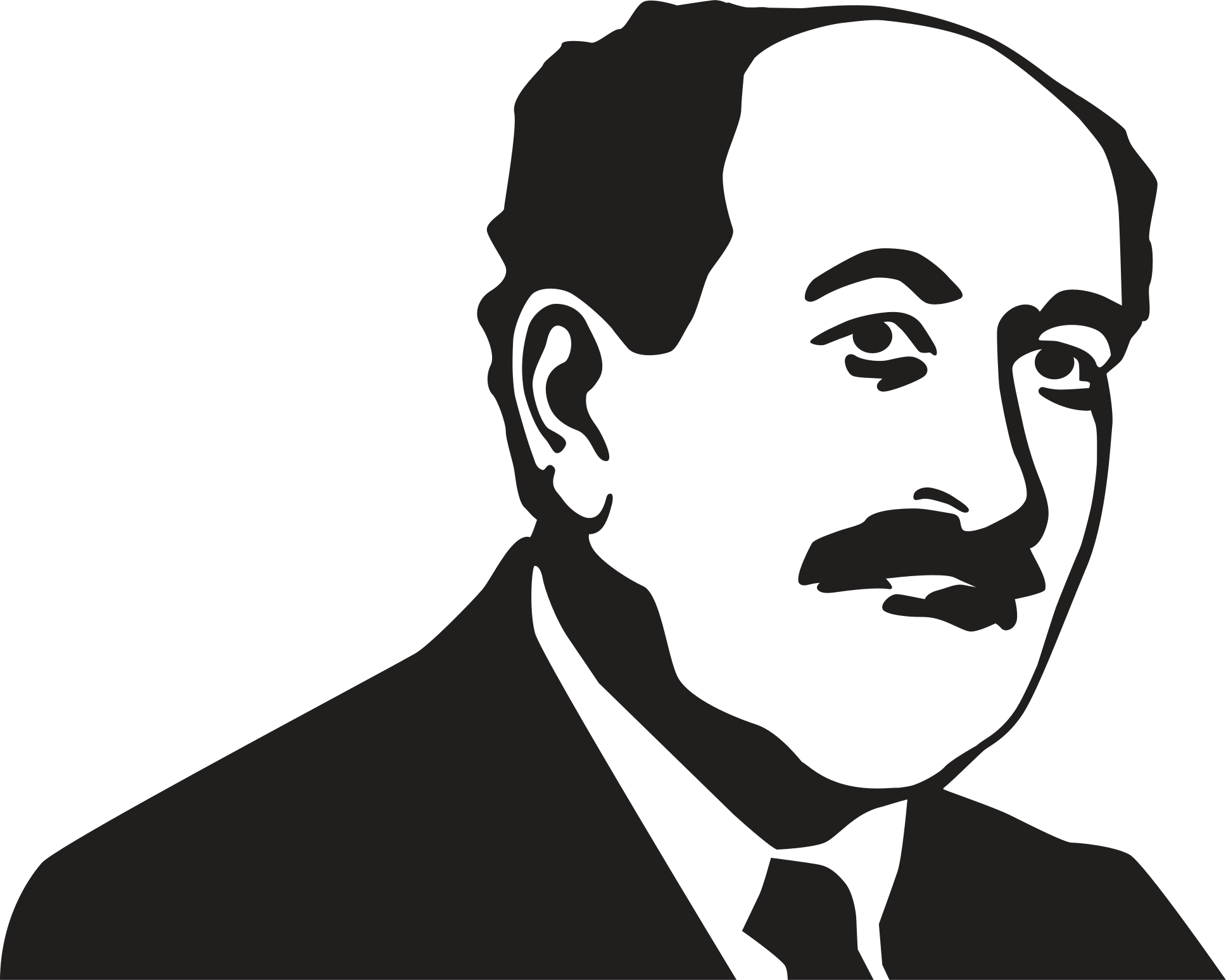
In honour of Otto Stern, whose work on demonstrating spin quantisation created fundamental prerequisites for the use of magnetic resonance, and in recognition of the professional lifetime achievements of internationally outstanding figures in the field of magnetic resonance, the GDCh Division of Magnetic Resonance established the Otto-Stern Award in 2020. The award is presented at irregular intervals, at most once a year. It comprises a certificate of award, a trophy, and invitations to give a ceremonial lecture as part of the Division conference and to attend a formal dinner. A committee appointed by the Division Board decides on the presentation of the award.
Guidelines for the presentation of the Otto-Stern Award
Submission deadline: 5 January 2026
Objective
Since 2020, the GDCh Division of Magnetic Resonance has awarded the Otto-Stern Award at irregular intervals, no more than once a year, in recognition of the professional lifetime achievements of internationally outstanding figures in the field of magnetic resonance. The award is presented in memory of Otto Stern, whose work on demonstrating spin quantisation created the fundamental prerequisites for the use of magnetic resonance.
The award
The award comprises a certificate, a trophy and an invitation to a formal dinner. The award ceremony will take place as part of the 47th FGMR Annual Discussion Meeting (14–17 September 2026 in Mainz). Following the award ceremony, the awardee is expected to give a commemorative lecture. The Division Board decides on the award.
Nomination
Persons who have made outstanding scientific contributions to magnetic resonance over the course of their careers may be nominated. All members of the Division are entitled to submit nominations; self-nominations are not permitted. Each nomination must comprise an informal statement recognising the nominee’s special professional merits and a curriculum vitae (including contact details). Each nomination will be considered for the current call year and the following two years.
Submission
Please send all nominations electronically and combined in a single PDF file to the GDCh Office, for the attention of Maike Fries.

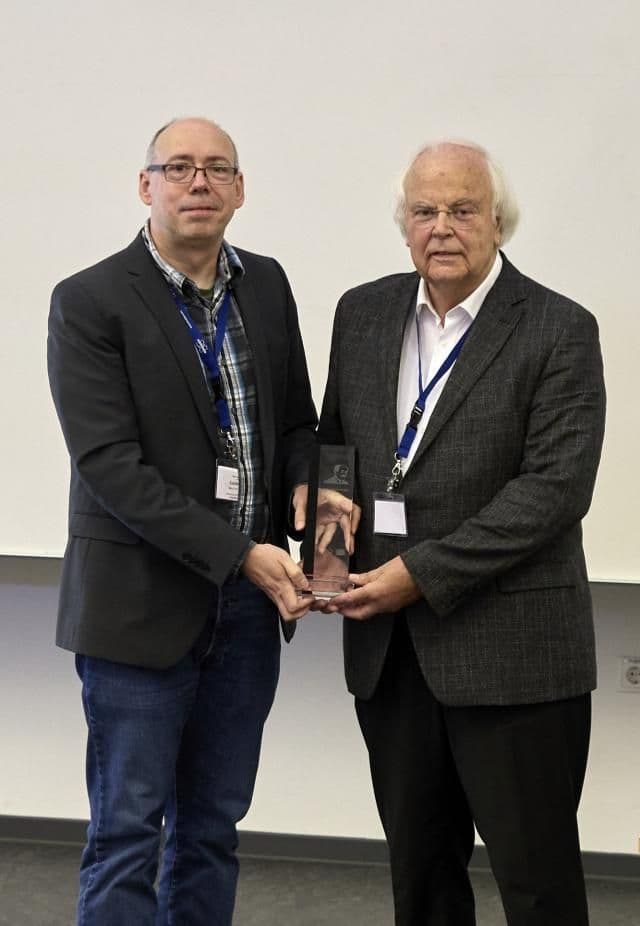
The Division of Magnetic Resonance of the German Chemical Society presented the 2025 Otto-Stern Award to Prof. Dr. Paul Heitjans in Bonn on 18 September 2025:
"In recognition of his fundamental work on ion dynamics and diffusion in solids using NMR, as well as the establishment of β-NMR for studying mobility in solid ionic conductors. Professor Heitjans systematically investigated diffusion processes in detail over extensive timescales using an arsenal of complementary NMR techniques and achieved pioneering results, particularly with lithium-ion conductors, long before their enormous significance as battery materials became apparent. He also conducted pioneering work in β-NMR, using 8Li in particular as an ideal nuclear spin probe for relaxation processes, employing it comprehensively for the first time to study ion mobility. Overall, for many decades he has practised magnetic resonance with exceptional breadth and depth, taking an interdisciplinary approach in a highly topical field of research".
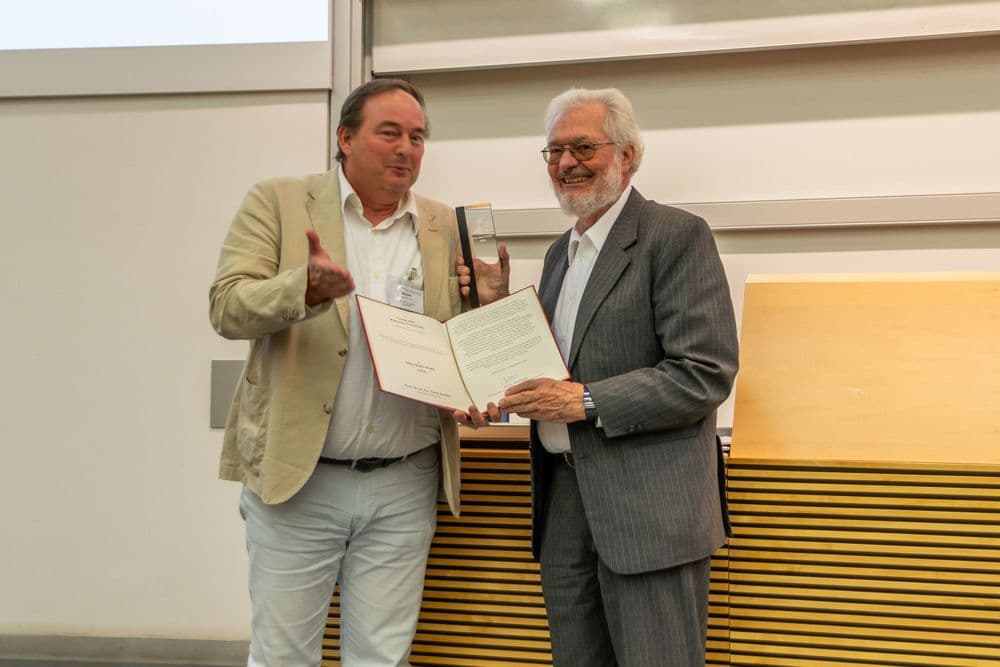
The Division of Magnetic Resonance of the German Chemical Society presented the 2024 Otto-Stern Award to Prof. Dr. Dr. h.c. Horst Kessler in Rostock on 12 September 2024:
"In recognition of his fundamental contributions to the conformational analysis of proteins such as spider silk protein and cyclic peptides using NMR spectroscopy, which enabled the successful design of diagnostics and therapeutics for medical applications. Horst Kessler made fundamental contributions to the understanding of exchange processes using NMR and inspired an entire generation of NMR spectroscopists with his contributions to multidimensional NMR spectroscopy. He uniquely linked new NMR spectroscopic methods with the design of predominantly cyclic peptides and medicinal chemistry research. Highlights include the RGD peptides designed on the basis of NMR-based conformational analysis and optimised for bioavailability, which modulate the function of integrins. The Otto-Stern Award commemorates the discovery of directional quantisation in spin ‘up’ and ‘down’. Horst Kessler used NMR spectroscopy with the aim of gaining and implementing ever new ideas for better medicines and diagnostics."
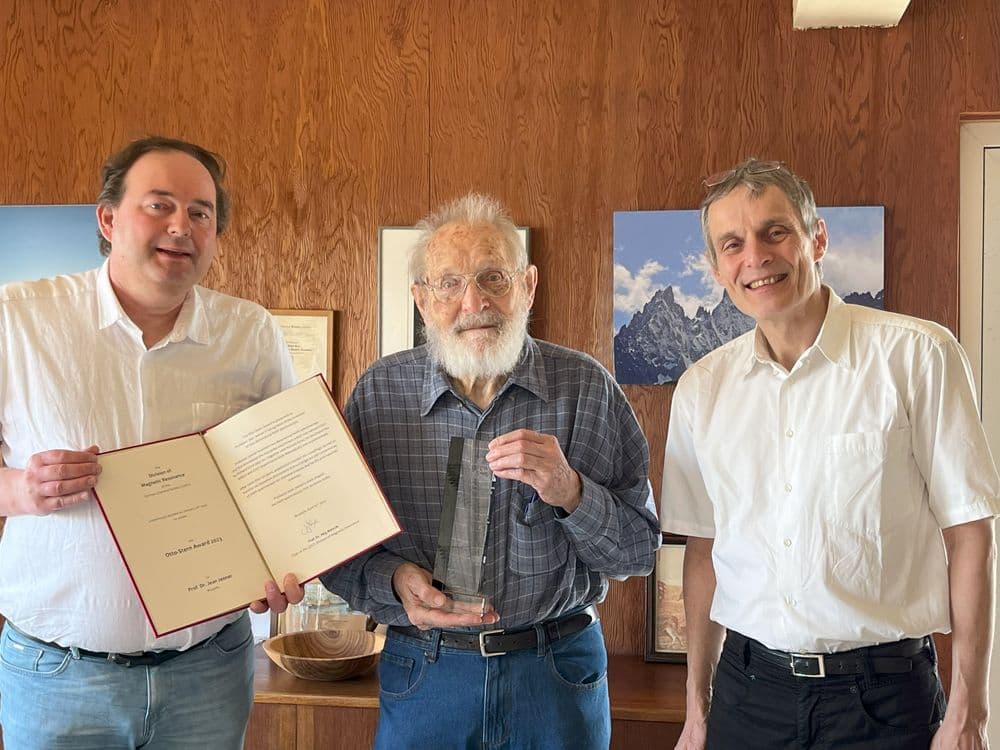
The Division of Magnetic Resonance of the German Chemical Society presented the 2023 Otto-Stern Award in Brussels on 15 April 2023 to Prof. Dr. Jean Jeener (1931–2023):
"Professor Jeener invented two-dimensional NMR spectroscopy and first formulated the two-pulse experiment which was named COSY by Richard Ernst later on. Together with Richard Ernst, he developed the NOESY and EXSY experiments both theoretically and experimentally. After more than 50 years, polarization transfer via J couplings, as well as transfer via relaxation phenomena and exchange are still cornerstones of NMR spectroscopy for chemical analysis and for life and materials sciences. Professor Jean Jeener’s work shaped the NMR spectroscopy that we know today."
Award ceremony video (YouTube)
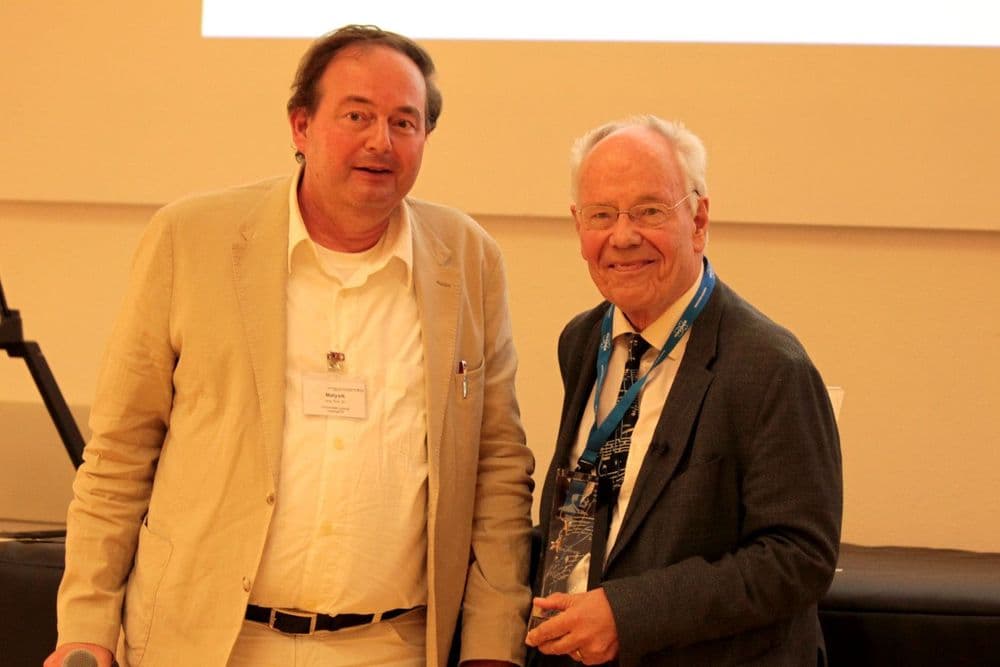
The Division of Magnetic Resonance of the German Chemical Society presented the 2022 Otto-Stern Award to Prof. Dr. Jörg Kärger on the occasion of the 43rd FGMR Annual Discussion Meetings in September 2022 in Karlsruhe:
"In recognition of his fundamental contributions to the application of pulsed-field-gradient NMR spectroscopy in the analysis of molecular transport processes in porous materials. Based on NMR studies of transport processes, Prof. Dr. Kärger has had a broad and interdisciplinary influence on NMR spectroscopy: he has advanced the establishment of fundamental physical models of mass transport at the molecular level. This includes multi-range diffusion, the consideration of adsorption processes, and the experimental demonstration of one-dimensional diffusion. His work on mass transport and the sorption of complex nanoporous materials has had a far-reaching impact on materials science and engineering. The knowledge gained from his work on molecular processes is highly relevant to technical applications such as molecular separation processes and heterogeneous catalysis. His work therefore exemplifies how Magnetic Resonance at the highest level, consistently advanced methodologically, can help address current challenges, for example in the fields of sustainability, climate and energy."
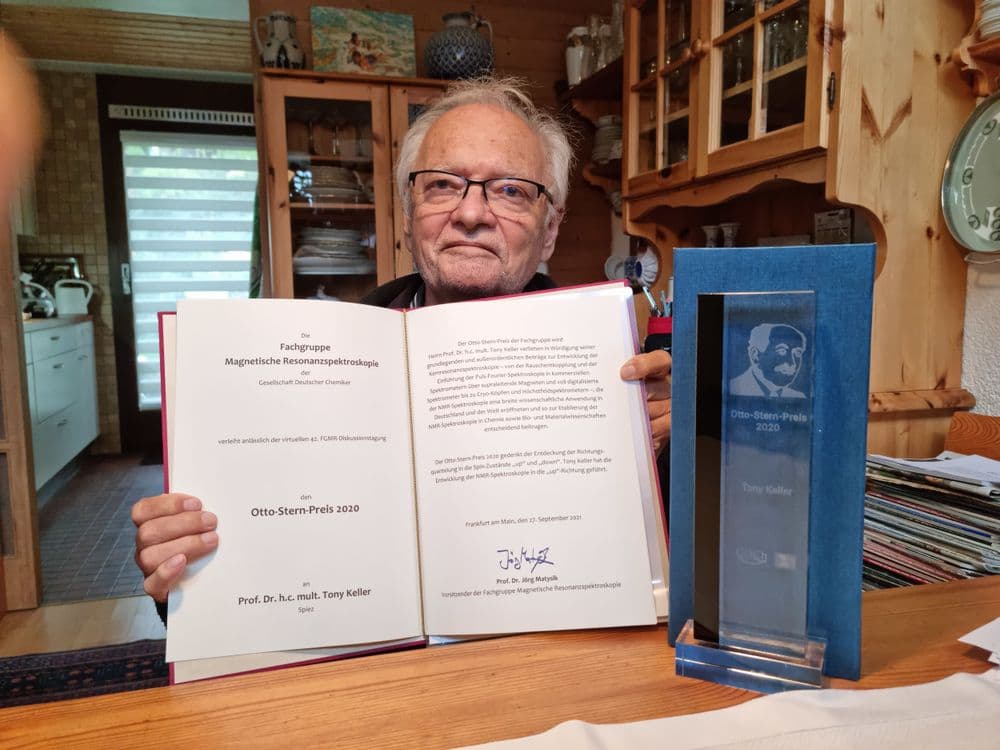
The first Otto-Stern Award of the Division of Magnetic Resonance was awarded to Prof. Dr. h.c. mult. Tony Keller (1937-2023) :
"In recognition of his fundamental and extraordinary contributions to the development of nuclear magnetic resonance spectroscopy – from noise decoupling and the introduction of pulse Fourier spectroscopy in commercial spectrometers, through superconducting magnets and fully digitalised spectrometers, to cryo probes and ultra-high-field spectrometers –, which opened up broad scientific applications of NMR spectroscopy in Germany and worldwide, thereby making a decisive contribution to establishing NMR spectroscopy in chemistry, biology and materials science. The 2020 Otto-Stern Award commemorates the discovery of directional quantisation into the spin states ‘up’ and ‘down’. Tony Keller led the development of NMR spectroscopy in the ‘up’ direction."
| Year | Place of award | Name | Reason for the award |
| 2025 | Bonn | Prof. Dr. Paul Heitjans | Fundamental work on ion dynamics and diffusion in solids using NMR, as well as the establishment of β-NMR for studying mobility in solid-state ion conductors. |
| 2024 | Rostock | Prof. Dr. Dr. h.c. Horst Kessler | Fundamental contributions to the conformational analysis of proteins such as spider silk protein and cyclic peptides using NMR spectroscopy, which enabled the successful design of diagnostics and therapeutics for medical applications |
| 2023 | Brussels, BE | Prof. Dr. Jean Jeener† | Invention of two-dimensional NMR spectroscopy and the first formulation of the two-pulse experiment |
| 2022 | Karlsruhe | Prof. Dr. Jörg Kärger | Fundamental contributions to the application of pulsed-field gradient NMR spectroscopy in the analysis of molecular transport processes in porous materials |
| 2020 | Spiez, CH | Prof. Dr. h.c. mult. Tony Keller† | Contributions to the development of nuclear magnetic resonance spectroscopy |