
School and University

    Students and Apprentices

    Undergraduate and PhD Students

    Teachers

    Higher Education Statistics

    Scholarships

Career

    Career Guidance

    Job Vacancies

    Salary Information and Income Survey

    Academy

    Mentoring

Community

    Divisions

    Young Chemists’ Forum (JCF)

    Local Sections

    Regulars' Get-Togethers

    Chem_Connect

    Equal Opportunities and Diversity

    Partnerships and International Activities

    Volunteering

    Membership

Discover Chemistry

    Top Topics

    “Nachrichten aus der Chemie” – Members’ Magazine

    Scientific Journals

    Statements and Position Papers

    Press Releases

    Brochures and Academic Publications

    Books, Videos and Podcasts

    The Fascination of Chemistry

    Cartoons

    Biographies of Female Chemists

Events

    Conferences

    Academy

    Lectures

    Further Events

Awards

    Prices

    Historical Sites of Chemistry

About Us

    Board and Other Bodies

    The Office

    Statutes and Code of Conduct

    Charities

    Press and Public Relations

    Sustainability

MyGDCh

GDCh

Chemistry for a better world

© 2026 Gesellschaft Deutscher Chemiker. All rights reserved.

NewsletterDownloadsPressContactGDCh Shop
Legal NoticeData PrivacyTerms & Conditions
Homepage/Career/Careers guidance/Diversity of Career Profiles in Chemist.../Career interviews/Senior Scientific Councillor

I AM: Senior Scientific Counsellor

"It is exciting and challenging to develop long-term strategies for occupational safety. It motivates me to make the handling of chemicals safe and practical."
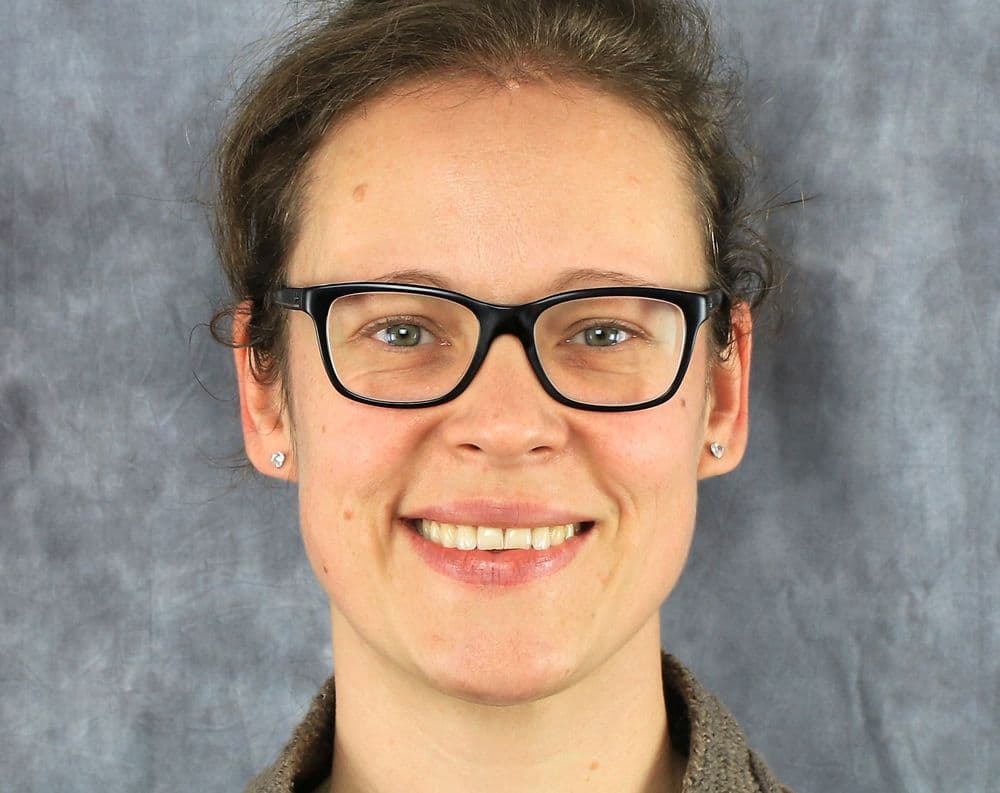
Dr. rer. nat. Romy Marx | Federal Institute for Occupational Safety and Health

Dr. Romy Marx ...

She completed a doctorate in biochemistry, did a postdoctoral fellowship and then joined the Federal Institute for Occupational Safety and Occupational Medicine as a research associate. She is now a civil servant there as a senior research councillor and works to protect employees from risks associated with chemical substances used at work.

The career interview

My interest in flora and fauna and my desire to understand how life works led me to study biochemistry. This did not happen by chance; it had been my wish from an early age. Specialising in neurophysiology and electrophysiology was probably more a matter of circumstances coinciding. More specifically, my ties to a particular location were a determining factor. I did not want to do a PhD or postdoctoral research abroad, but wanted to remain loyal to the Ruhr region. This may have restricted me in terms of subject matter, but you can make any project your own, and I ultimately found my PhD topic extremely fascinating. I was particularly intrigued by the search for genotypic causes of phenotypic, clinical symptoms.

The path of a natural scientist is fairly clearly mapped out. After completing a doctorate, you take on various postdoctoral positions, publish as much as possible in high-impact journals, complete your habilitation and obtain a professorship. So I took up a postdoctoral position. Even then, however, I was already aware that preparing applications to secure third-party funding was not a long-term solution for me. I therefore began looking for other positions beyond research at universities and institutes. During my search, there were fundamental changes to European chemicals legislation and the REACH Regulation came into force, leading to the recruitment of many new specialists in Germany. This worked in my favour. The basic requirements were a degree in a natural science and knowledge of English, coupled with the offer of a permanent position at the Dortmund site. I applied and was fortunate enough to get the job.

What I do today has nothing to do with what I studied. My studies and doctorate help me to work on a project with focus, understand scientific connections, work in a structured way and develop a certain tolerance for frustration. However, I have always been the sort of person who sees my job as enabling my life, rather than allowing my job to determine my life. Therefore, personal matters have always come before professional ones, and personal security and certainty in planning have taken precedence over thematic aspirations. I had always secretly been interested in working in the public sector. The opportunity to join the Federal Agency came sooner than expected because the possibility simply presented itself.

In my tenth year, I mainly provide policy advice. When implementing EU legislation in national law (such as occupational safety) and under REACH, Member States undertake tasks that fall within federal jurisdiction. For the protection of employees from risks involving chemical substances at work, this specifically means that regulations must be proposed and developed which pursue this protective objective and are suitable for implementation in Germany. The responsible ministry is then provided with expert advice when rule-making in Germany and at EU level is coordinated with the social partners (either through supporting work or the delegation of tasks). Providing expert advice is part of my responsibilities.

  • Interest in professional policy contexts
  • Enjoyment and enthusiasm in developing long-term projects (5 years or more)
  • Good communication skills (excellent command of English)
  • Understanding of cultural differences and knowledge of various stakeholder groups
  • Ability to critically assess your own work (being technically correct does not necessarily mean being politically expedient)

I coordinate a team (5 people) within my Division (15 people) and am also part of a matrix-structured process. In addition to mandatory administrative tasks (the authority’s file security), I am a member of several German and EU working groups, meaning that I regularly travel within Germany and the EU. I am also regularly invited to give presentations and actively organise events for German or European audiences. These activities are generally planned well in advance and are rarely unforeseen. We have to respond at short notice when, for example, we receive minor enquiries falling within our area of responsibility from political parties or directives from ministries. Everything else then has to be put on hold because processing times of just a few hours are required. However, this is rather the exception and the work is very well planned. Inter- and intradisciplinary collaboration and teamwork are fundamental pillars of my work.

The (self-determined) regular working hours, free weekends and the very good compatibility of family and career are the major differences compared with the time I spent doing my doctorate and in research. Furthermore, my financial future no longer depends on publishing as much as possible or acquiring third-party funding. This gives me time to focus entirely on the specialist content of my work. I also personally consider it a great advantage that I am permanently active in my specialist field, which allows me to build a solid and reliable network and genuinely specialise in the subject area.

I admit that I am an idealist and draw a great deal of energy from the possibility that my work might make the world just a little better.

If I act correctly and manage to convince policymakers with well-founded arguments, I may be able to make the work of some employees so safe that they are no longer exposed to any health risks. That is what drives me. The challenging part is that you need staying power and patience before good ideas are truly put into practice and become part of everyday working life. But as I still have several decades of work ahead of me, I can afford to be patient.

Absolutely. Initially, the REACH Regulation was uncharted territory for everyone involved, and shaping its implementation and developing strategies were the predominant parts of my work in the early days. The work then led me to broaden my horizons and move on to other topics as well. At the beginning, you are also involved in all the sub-procedures; at some point, almost without any conscious effort, you specialise in certain aspects and areas of focus within the team. Over time, you also take on more responsibility, meaning that your duties increasingly shift towards administrative and personnel management responsibilities.

Typically, one starts as a research associate and, subject to suitability and performance, is placed in a higher pay grade under the collective agreement. If civil service status is granted, one becomes a Scientific Counsellor, and here too, subject to suitability and performance, promotion to Senior Scientific Counsellor is envisaged. Further advancement is then only possible with personnel responsibility and staff management in the form of group leadership; however, such positions are naturally not often vacant. Secondments to the ministries, to commissions in Brussels or to ECHA in Helsinki are welcomed and supported and therefore also offer opportunities for development if this is something one wishes to pursue. Management positions are also possible over the course of one’s career.

As there are no longer as many positions as there were 10 years ago and the authorities now have a great deal of experience, getting started is certainly no longer as easy. However, if you are interested and enthusiastic, it is definitely worth applying for an advertised position.

To increase your chances of being hired, your application should in any case make clear your own motivation for wanting to work for an authority. This separates the wheat from the chaff when applications are reviewed. In fact, getting started is the most difficult part, and you should prepare very thoroughly if you are invited to an interview. We are looking for colleagues with whom we can work closely for many years, and applicants should reflect the same desire.

Gender notice

For reasons of readability, the simultaneous use of gender-specific language forms has been omitted. All references to persons apply to all genders.