
School and University

    Students and Apprentices

    Undergraduate and PhD Students

    Teachers

    Higher Education Statistics

    Scholarships

Career

    Career Guidance

    Job Vacancies

    Salary Information and Income Survey

    Academy

    Mentoring

Community

    Divisions

    Young Chemists’ Forum (JCF)

    Local Sections

    Regulars' Get-Togethers

    Chem_Connect

    Equal Opportunities and Diversity

    Partnerships and International Activities

    Volunteering

    Membership

Discover Chemistry

    Top Topics

    “Nachrichten aus der Chemie” – Members’ Magazine

    Scientific Journals

    Statements and Position Papers

    Press Releases

    Brochures and Academic Publications

    Books, Videos and Podcasts

    The Fascination of Chemistry

    Cartoons

    Biographies of Female Chemists

Events

    Conferences

    Academy

    Lectures

    Further Events

Awards

    Prices

    Historical Sites of Chemistry

About Us

    Board and Other Bodies

    The Office

    Statutes and Code of Conduct

    Charities

    Press and Public Relations

    Sustainability

MyGDCh

GDCh

Chemistry for a better world

© 2026 Gesellschaft Deutscher Chemiker. All rights reserved.

NewsletterDownloadsPressContactGDCh Shop
Legal NoticeData PrivacyTerms & Conditions
Homepage/Career/Careers guidance/Diversity of Career Profiles in Chemist.../Career interviews/Laboratory Manager at the Institute of...

I AM: Laboratory Manager in Forensic Medicine

"Using mass spectrometry, I analyse samples from deceased individuals for tens of thousands of substances. This enables me to draw conclusions about the cause of death and help solve crimes."
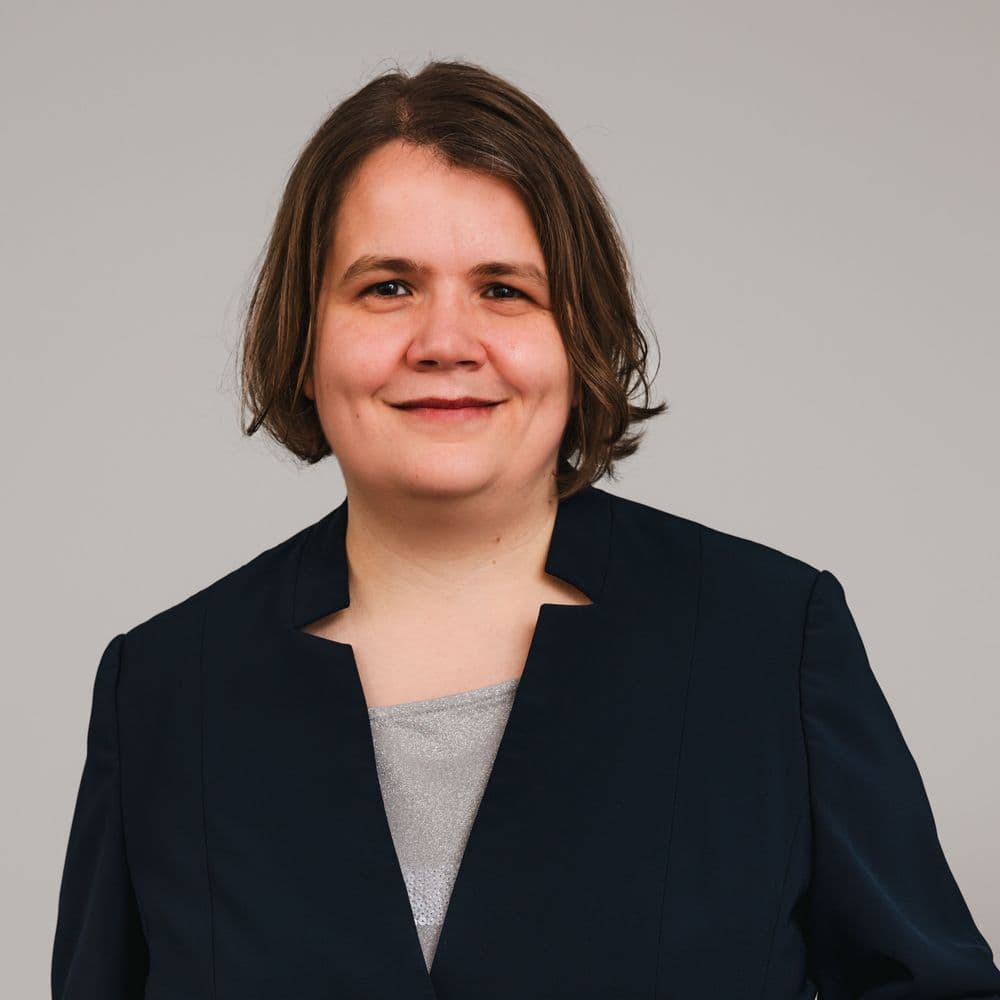
Dr Nadine Theofel | State Institute for Forensic and Social Medicine Berlin

Dr. Nadine Theofel ...

specialised in Analytical Chemistry during her studies. Her passion for this field continued throughout her doctoral studies and postdoctoral research. To be able to apply for laboratory management positions after her postdoctoral period, she further trained in GMP and GLP, among other areas. Today, she heads a mass spectrometry laboratory in Forensic toxicology at the Berlin State Institute of Forensic and Social Medicine.

The careers interview

Analytical chemistry fascinates me because it connects the various fields of chemistry: Inorganic, Organic and physical chemistry. This versatility makes it so exciting and fulfilling.

Many socially relevant questions can be answered with the help of analytical chemistry. I find it particularly exciting that, not only can new chemical structures be discovered and the concentrations of substances in complex samples determined in the laboratory using sensitive measuring instruments, but analyses can also be carried out on site. This variety and the broad range of applications are simply incredibly exciting.

I am now the laboratory manager for mass spectrometry at the State Institute for Forensic and Social Medicine in Berlin. There, I help investigate accidents, suicides and homicide offences.

I studied chemistry at Technische Universität Berlin and specialised in analytical chemistry during my studies. During this time, I attended all the lectures on this subject and was fortunate to have a very motivating doctoral supervisor who introduced me to the field at an early stage – at the time, it was nitrite that sparked my interest. As part of my diploma thesis, I was able to further develop a photometric method that can also be used to detect inorganic ions in water. I successfully applied this method last year in a suicide case in which the person had ingested curing salt.

This enthusiasm stayed with me during my doctorate. Here, I had the opportunity to search for new metabolic biomarkers. Among other things, the aim was to identify metabolic biomarkers for quality characteristics such as the suitability of potato tubers for crisp production and their storage life. My doctoral supervisor fostered my passion for analytical chemistry from an early stage and repeatedly provided me with new scientific projects. Ultimately, I was able to publish extensively at the Max Planck Institute for Molecular Plant Physiology and present my findings at conferences and workshops.

Unlike others in my profession, I never had a specific desire to enter forensic medicine, particularly forensic toxicology. However, I was always open to new scientific questions.

During my postdoctoral period, I worked on root exudates, the underground part of the plant, and delved deeply into fundamental research. My task was to establish a sample preparation protocol for hydroponic systems, detect marker substances using mass spectrometry and elucidate the chemical structure of the substances found.

In my free time, I pursued vocational training in the areas of Good Manufacturing Practice (GMP) and Good Laboratory Practice (GLP) in order to apply for laboratory manager positions after my postdoctoral period. During this time, I also completed the vocational training offered by the GDCh to become a certified quality expert.

Today I run a mass spectrometry laboratory in forensic toxicology. Our main task is to determine whether deceased individuals were under the influence of medicines, drugs or other psychoactive substances shortly before their death. Constantly dealing with the subject of death is emotionally challenging, especially when you know the stories behind the cases.

We analyse prepared urine samples using LC/MS and GC/MS. We then quantify the relevant substances predominantly in femoral vein blood. We assess whether the dose taken was still within the therapeutic range, had a toxic effect or was even coma-inducing and fatal.

In doing so, we rely on extensive literature documenting previously published cases. It is often necessary to develop new methods to achieve more specific detection. This challenge motivates us, even when the pressure is sometimes intense, particularly when it concerns unexplained causes of death. Exchanging knowledge with colleagues from other toxicology institutions helps us find solutions.

Beforehand, I attended the GDCh course "Introduction to toxicology for Chemists". This helped me greatly in familiarising myself with toxicology.

Thanks to my many years of experience with mass spectrometers, both in the high- and low-resolution ranges, I found it relatively easy to get started with the analytical aspect of my new role. In retrospect, I think it is important to be well versed in analytical chemistry, as communication with pharmacists and doctors depends heavily on this knowledge.

It is also important to be emotionally prepared to deal with the subject of death every day. Even after many years, I still find it difficult to enter the post-mortem examination room. I am grateful for every day when this is not necessary. This psychological strain should not be underestimated, and you need a great deal of inner strength to cope with it.

As a rule, between three and six deceased persons are autopsied by forensic pathologists at our facility from Monday to Friday. A toxicological examination often follows, comprising alcohol determination, screening by GC/MS or LC/MS, and quantification of the analytes detected in femoral vein blood. The technical staff handle routine tasks such as sample preparation and carrying out the measurements. The laboratory management then evaluates the results, while the final report to the public prosecutor’s office is issued by the head of the department or their deputy.

We often find the substance that contributed to the death. Sometimes, however, we also discover new, previously unknown substances, as the drug market is constantly producing new compounds. This task is often like a puzzle that sometimes pushes us to the limits of what is possible, but the challenge and the satisfaction we feel when we find the solution make all the effort worthwhile.

If there is no suspicion of third-party involvement, the examinations can be carried out at leisure. In rare cases, however, possible third-party involvement must be investigated. These cases are then classified as “immediate autopsies” and must be processed on the same day wherever possible. Fitting this in with the daily routine can be a challenge.

In the past, research work predominated. Today, most cases are routine. The versatility only comes into play in a few cases. These are all the more exciting for me.

My working day in the laboratory and office is now very structured, due both to official requirements and my family routine. The official requirements, for example, specify clear time windows for certain work processes and documentation, while family life ensures that I plan my time very efficiently to keep everything manageable.

Despite the often demanding work, I occasionally take unresolved mass spectra home with me because I enjoy solving these puzzles. It gives me a sense of control and enjoyment of science, especially in a field so often shaped by tragic circumstances. My studies provided me with a good foundation for this by introducing me to many chemical compounds and reactions – this knowledge now helps me enormously when planning experiments or discussing possible poisons.

It may sound macabre, but it is always astonishing what means people choose and which chemical compounds play a role in their attempts to end their lives. This variety shows how creative and complex such cases can be, which challenges me time and again. Sometimes, however, it is also emotionally very difficult to engage with these stories, especially when those affected are young or are acting out of deep despair.

It is fascinating to study these molecules and remain flexible, as the topics are constantly changing. Today, we may be dealing with mushroom poisoning, tomorrow with knockout drops and the day after tomorrow with new psychoactive substances.

Many of our cases are emotionally distressing, particularly when children are involved. Constant contact with such tragic stories requires a great deal of mental strength and sometimes leaves a heaviness that is difficult to shake off.

We are constantly faced with two challenges: on the one hand, new psychoactive substances enter the market every year. This happens, among other things, to circumvent the Narcotics Act. It is important to keep track of developments. On the other hand, young adults in particular often consume mixtures of different narcotics. Knowing which mixtures are currently trending makes our daily work easier.

By contrast, the analysis of samples has hardly changed in recent years. Established routines are also used on newer equipment so that tried-and-tested standards can be maintained.

However, I am very interested to see what role AI will play in our field in the future. I can well imagine that routine analyses in particular will become significantly easier and more reliable as a result.

Our structure is relatively straightforward: we have a department manager, two laboratory managers and five technical staff members. Therefore, there are hardly any traditional Career or advancement opportunities in our department.

However, there are certainly opportunities to develop professionally and take on additional responsibility, for example by overseeing new projects or providing vocational training for staff. By taking on such special responsibilities and the expertise associated with them, people are often recognised.

In any case, it is important to have a good knowledge of analytical chemistry – especially organic chemistry, but also inorganic chemistry. It is also helpful to have previously looked after a suite of instruments including mass spectrometers – this understanding of the equipment saves a great deal of time.

I would also recommend taking courses in toxicology at an early stage, in order to better assess the pharmacokinetics and metabolism of the substances being examined – and thus also to better understand interactions.

Experience in accredited laboratories is also an advantage. Although forensic post-mortem toxicology cannot yet be covered by a DIN standard, it is very helpful to know how best to work in accordance with DIN ISO 17025.

Gender notice

For reasons of readability, the simultaneous use of gender-specific forms of language is avoided. All references to persons apply to all genders.