ARTIKEL

Smartphone‐Assisted Film Fluorescent Sensor for Quantitative and Visual Detection of Fluoride Ions

28.08.2025
Smartphone‐Assisted Film Fluorescent Sensor for Quantitative and Visual Detection of Fluoride Ions

Von Wiley-VCH zur Verfügung gestellt

A portable film-based fluorescent sensor DIP@CP enables smartphone-assisted F visual detection in real samples via colorimetric and ratiometric fluorescent changes.


Abstract

Film-based fluorescent sensor DIP@CP was developed by incorporating the organic fluorophore DIP into a chitosan–polyvinyl alcohol (CS-PVA, CP) composite film. The sensor enabled selective and quantitative fluoride ion detection through dual-mode colorimetric and ratiometric fluorescent responses, facilitated by DIP’s favorable photophysical properties including near-infrared emission and large Stokes shift (>139 nm), which effectively reduced background interference. The detection mechanism relied on a specific F-triggered Si–O cleavage, ensuring high selectivity. The composite film design enhanced portability for field applications, whereas integration with smartphone technology allowed for visual F detection by RGB analysis. Practical applications were successfully demonstrated in monitoring fluoride levels in diverse real-world samples, including water and commercial toothpaste samples.

Verwandte Artikel

Smartphone‐Assisted Film Fluorescent Sensor for Quantitative and Visual Detection of Fluoride Ions
Organic Fluorophores for Studying Lipid Membrane Structures and Dynamics
Smartphone‐Assisted Film Fluorescent Sensor for Quantitative and Visual Detection of Fluoride Ions
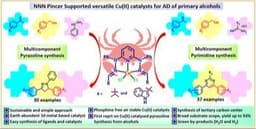
Phosphine‐Free NNN Pincer Supported Cu(II) Catalysts for Sustainable Multi‐Component Synthesis of Pyrazolines and Pyrimidines via Dehydrogenation of Renewable Primary Alcohols
Smartphone‐Assisted Film Fluorescent Sensor for Quantitative and Visual Detection of Fluoride Ions
CBr4 as an Efficient Halogen Bond Donor Catalyst in Pictet–Spengler Cyclizations: A Metal‐Free Approach to the Synthesis of Benzazepinoindoles and Tetrahydro‐β‐carbolines
Smartphone‐Assisted Film Fluorescent Sensor for Quantitative and Visual Detection of Fluoride Ions
Stimuli‐Responsive Supramolecular Polymers of Mono‐ and Bis‐triazolylphenylazoaniline‐Functionalized Copillar[5]Arenes: With Distinctive Binding Modes
Smartphone‐Assisted Film Fluorescent Sensor for Quantitative and Visual Detection of Fluoride Ions
From Inception to Innovation: 20 Years of Nanoarchitectonics