MXene‐Derived g‐C3N5/TiO2/Ti3C2 Nanoheterostructure Activated by Peroxymonosulfate for Photocatalytic Tetracycline Degradation under Visible Light

Von Wiley-VCH zur Verfügung gestellt
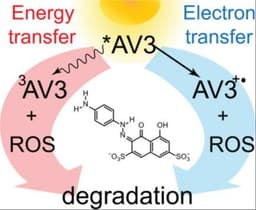
Under visible light, a Z-type heterojunction is formed between Ti3C2/TiO2 and g-C3N5 to enhance charge separation. Electrons and holes directly or indirectly react with PMS to generate free radicals such as ·O2−$\text{O}_{2}^{-}$,·OH, and 1O2 to degrade tetracycline.
Photocatalysis-assisted peroxymonosulfate (PMS) activation is a promising technology for the degradation of antibiotics in water remediation. Herein, MXene-derived oxide (TiO2) and g-C3N5 Z-scheme ternary heterojunction photocatalytic composite materials are synthesized using an electrostatic self-assembly approach and characterized. The optimized g-C3N5/TiO2/Ti3C2 (CNTT) heterostructure demonstrates exceptional photocatalytic activity for tetracycline (TC) removal, achieving 90% degradation within 60 min at an optimal g-C3N5:TiO2/Ti3C2 mass ratio of 3:2. Remarkably, the system exhibits broad pH adaptability (80.8–96.3% TC removal across pH 2–12), overcoming the pH sensitivity limitations of traditional PMS-based processes. Mechanistic investigations reveal a synergistic photocatalysis-PMS activation pathway, with quenching experiments confirming SO4−$\text{SO}_{4}^{-}$, ·OH, ·O2−$\text{O}_{2}^{-}$, and 1O2, as dominant reactive species. The CNTT composite maintains 65.2% degradation efficiency after five cycles, demonstrating robust stability. Coexisting ions negatively influence TC removal in the order: H2PO4 − > SO42−$\text{SO}_{4}^{2 -}$ > Cl− > NO3−$\text{NO}_{3}^{-}$ > CO32−$\text{CO}_{3}^{2 -}$. This work establishes the CNTT heterostructure as a promising, environmentally tolerant candidate for efficient pharmaceutical pollutant remediation in complex aqueous matrices.