A Decade of Transition from Chemical to Green Synthesis of Nanoceria and Nanozirconia: Exploring Their Biomedical Potential
Von Wiley-VCH zur Verfügung gestellt
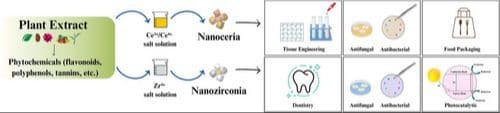
The urgent need for sustainable nanomaterials has driven the development of green synthesis methods in materials science. This review highlights recent advances in eco-friendly synthesis, properties, and applications of CeO2 and ZrO2 nanoparticles, focusing on plant extract-mediated methods. Their biomedical relevance, including ROS scavenging, biocompatibility, antimicrobial activity, redox behavior, and potential in osteointegration and tissue regeneration, is discussed.
Abstract
Nanotechnology has become a valuable tool in nanomedicine, providing new ways to combat various biomedical challenges. This study contrasts green synthesis methods, which use plant extracts, with traditional techniques like sol–gel and hydrothermal synthesis. While traditional methods produce well-defined nanoparticles, they rely on toxic reagents and harsh conditions. Although green synthesis provides a sustainable substitute, it faces difficulties with standardization and reproducibility. Nanoceria and nanozirconia are commonly used in biomedicine due to their redox properties, biocompatibility, and ability to regulate reactive oxygen species (ROS) levels and oxidative stress. Nanozirconia (ZrO2 nanoparticles) is recognized for its strength and stability, making it well-suited for dental applications. Nanoceria (CeO2 nanoparticles) is known for its redox activity and biocompatibility, particularly in tissue engineering. The review highlights that the antibacterial activity differs across the synthesis methods, with CeO2 showing better efficacy than ZrO2 due to its redox behavior and interactions with membranes. The cytotoxicity analysis emphasizes the need to refine synthesis parameters to lower dose-related toxicity. Overall, the study highlights the role of green synthesis for producing biocompatible nanoparticles and encourages its broader use in environmentally friendly biomedical nanotechnology.